

AC installation Port Charlotte requires careful planning to handle the region’s intense summer heat, high humidity, and salt air exposure. Whether you’re replacing a worn-out system or upgrading to a more efficient model, choosing the right equipment and contractor makes all the difference in comfort, energy bills, and system longevity. Understanding the installation process, costs, and local considerations helps Port Charlotte homeowners make informed decisions that protect their investment for years to come.
Quick Answer: AC installation Port Charlotte involves replacing or installing new air conditioning equipment in residential or commercial properties. The process typically takes one to three days, depending on system complexity. Professional installation includes load calculations, equipment sizing, ductwork evaluation, refrigerant charging, and system testing. Costs range from $3,500 to $8,500 for most single-family homes, with variables including system size, efficiency rating, and existing infrastructure.
What Makes AC Installation Port Charlotte Different?
Port Charlotte presents unique challenges that impact every aspect of air conditioning installation. The coastal climate creates conditions that accelerate wear on HVAC equipment and demand specific installation practices.
Salt air corrosion affects outdoor condenser units faster than in inland areas. Therefore, many contractors recommend coastal-rated equipment with specialized coatings that resist corrosion. Additionally, the high humidity levels throughout most of the year require systems with excellent dehumidification capabilities, not just cooling power.
Hurricane preparedness also influences installation decisions in Port Charlotte. Moreover, proper securing of outdoor units prevents damage during severe weather events. Many homeowners choose elevated platforms or reinforced mounting pads that meet local wind load requirements.
The intense UV exposure in Southwest Florida degrades electrical components and housing materials more quickly than in northern climates. Consequently, quality installation includes proper shading considerations and UV-resistant materials wherever possible. This attention to environmental factors extends system lifespan significantly.
Top 7 Factors That Affect AC Installation Port Charlotte Costs
Understanding what drives installation costs helps you budget appropriately and avoid surprises. These factors determine the final price for most residential projects.
1. System Size and Capacity
The tonnage required to cool your home directly impacts equipment costs. A ton is a unit of cooling capacity equal to 12,000 BTUs per hour. Port Charlotte homes typically require 2.5 to 5 tons of cooling capacity, depending on square footage, insulation quality, and sun exposure. Larger systems cost more for both equipment and installation labor.
2. SEER Rating and Efficiency
The Seasonal Energy Efficiency Ratio (SEER) measures how efficiently an air conditioner operates over a typical cooling season. SEER ratings measure cooling output divided by energy consumed over an entire cooling season. Higher SEER systems (16-22) cost $1,000 to $3,000 more than standard efficiency models (14-15 SEER), but they reduce monthly electric bills by 20-40%. In Port Charlotte’s hot climate, the payback period for high-efficiency equipment averages 5-7 years.
3. System Type and Features
Single-stage systems run at full capacity whenever operating, while two-stage and variable-speed models adjust output to match cooling demand. Variable-speed systems provide superior humidity control, which is essential in Port Charlotte’s muggy climate. However, they add $800 to $2,500 to installation costs. Additionally, features like smart thermostats, zoning controls, and advanced air filtration increase the total investment.
4. Ductwork Condition and Modifications
Existing duct systems must be evaluated for leaks, proper sizing, and adequate insulation. Duct leakage is the loss of conditioned air through gaps and holes in ductwork before it reaches living spaces. In many Port Charlotte homes, especially those built before 2000, ductwork requires sealing or partial replacement to work efficiently with new equipment. Duct modifications add $500 to $3,000 to installation costs, depending on scope.
5. Electrical System Upgrades
Modern high-efficiency air conditioners often require dedicated 240-volt circuits with proper amperage. Furthermore, older homes may need electrical panel upgrades to safely support new equipment. Electrical work adds $300 to $1,500 to the project cost but ensures safe, code-compliant operation.
6. Permit and Inspection Requirements
Charlotte County requires permits for AC installation Port Charlotte projects, ensuring work meets building codes and safety standards. Permit fees typically range from $150 to $300. In addition, reputable contractors handle permitting and schedule required inspections, protecting homeowners from liability and ensuring proper installation.
7. Seasonal Demand and Timing
Installation costs peak during summer months when demand surges. Similarly, emergency replacements during heat waves often carry premium pricing. Scheduling installation during spring or fall can save 10-15% on labor costs and provide more flexible scheduling options.
How Does the AC Installation Port Charlotte Process Work?
Professional installation follows a systematic approach that ensures optimal performance and longevity. Understanding each step helps you know what to expect and recognize quality workmanship.
The process begins with an in-home assessment where the contractor performs a Manual J load calculation. A Manual J load calculation is an industry-standard method for determining the precise cooling capacity a home requires based on construction details, insulation, window types, orientation, and occupancy. This calculation prevents undersized systems that can’t keep up with demand or oversized systems that short-cycle and waste energy.
Next, the contractor evaluates existing ductwork, electrical service, thermostat location, and outdoor unit placement. They identify any modifications needed for optimal system performance. Meanwhile, they discuss equipment options, efficiency ratings, warranty coverage, and total project costs.
On installation day, the crew removes the old equipment and properly recovers refrigerant according to EPA regulations. Refrigerant recovery is the process of extracting and properly containing refrigerants from old systems to prevent environmental harm. They prepare the installation site, which may include reinforcing mounting pads, upgrading electrical connections, or modifying ductwork.
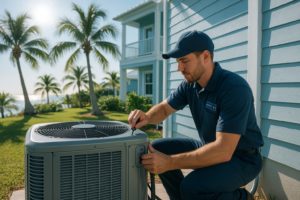
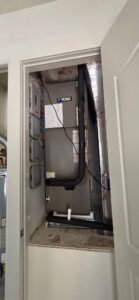
The new indoor air handler or furnace goes in first, followed by careful connection to existing or modified ductwork. Then, the outdoor condenser unit is positioned, leveled, and secured. Technicians run refrigerant lines, electrical connections, and condensate drainage, ensuring all connections meet manufacturer specifications.
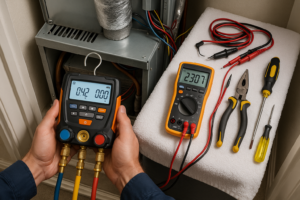
After physical installation, technicians charge the system with the precise amount of refrigerant specified by the manufacturer. They then conduct comprehensive testing, including airflow measurements, temperature differential checks, and system cycling verification. Finally, they demonstrate system operation and thermostat programming to the homeowner.
What Are the Best AC System Types for Port Charlotte Homes?
Different system types offer distinct advantages for Port Charlotte’s climate and various home configurations. Choosing the right type depends on your home’s layout, budget, and comfort priorities.
Traditional split systems remain the most common choice for Port Charlotte homes. These systems feature an outdoor condenser unit and indoor air handler or furnace connected by refrigerant lines. Split systems offer proven reliability, widespread service availability, and the most extensive range of efficiency options. They work well for homes with existing ductwork and provide whole-home cooling from a centralized system.
Packaged systems combine all components in a single outdoor cabinet, typically installed on the ground or roof. These systems simplify installation in homes with limited indoor space for air handlers. However, packaged units are less common in Port Charlotte residential applications, though they’re popular for commercial properties and mobile homes.
Ductless mini-split systems provide targeted cooling without requiring ductwork. A ductless mini-split system consists of an outdoor compressor unit connected to one or more indoor air handlers mounted on walls or ceilings. These systems excel for home additions, converted garages, or homes where installing ductwork is impractical. Furthermore, they offer zone control, allowing different temperatures in different rooms. The salt air in Port Charlotte can affect outdoor units, so coastal-rated ductless systems are worth the investment. For more details on sizing considerations, see our guide to 12000 BTU air conditioners.
Heat pump systems provide both cooling and heating using the same equipment. While Port Charlotte’s mild winters don’t demand robust heating, heat pumps efficiently handle occasional cool nights. They eliminate the need for separate heating equipment, which saves installation costs and space. However, heat pumps cost slightly more than cooling-only systems and require specific maintenance practices.
Hybrid systems combine electric heat pumps with gas furnace backup, optimizing efficiency across all temperature ranges. These systems automatically switch between electricity and gas based on which is more cost-effective. In Port Charlotte, where heating demand is minimal, traditional hybrids offer limited advantage. Nevertheless, they appeal to homeowners who want maximum flexibility.
How Much Does AC Installation Port Charlotte Cost?
Understanding the cost breakdown helps you budget appropriately and evaluate contractor estimates accurately. Prices vary based on equipment choices, home characteristics, and installation complexity.
Basic system replacement for a standard 2.5-ton, 14 SEER split system typically costs $3,500 to $5,000 when replacing similar existing equipment. This includes removal of old equipment, installation of new components, startup, and testing. Therefore, straightforward replacements with minimal modifications fall at the lower end of this range.
Mid-range installations for 3-ton, 16 SEER systems with minor duct modifications and electrical updates run $5,000 to $6,500. These projects address common issues found in Port Charlotte homes built in the 1980s and 1990s, including duct sealing and thermostat upgrades.
Premium installations featuring 4-ton, 18-20 SEER variable-speed systems with comprehensive duct renovation and smart controls cost $6,500 to $8,500 or more. High-efficiency equipment delivers substantial energy savings in Port Charlotte’s climate, where air conditioners run 8-10 months per year. Additionally, financing options make these systems accessible to more homeowners.
Ductless mini-split installations vary widely based on the number of indoor units. Single-zone systems start around $3,000 to $4,500, while multi-zone systems serving three to four rooms cost $6,000 to $12,000. Installation complexity increases with the number of zones and distance between indoor and outdoor units.
Hidden costs sometimes surprise homeowners during installation. Asbestos abatement around old ductwork, mold remediation, structural repairs to support equipment, and landscape restoration after outdoor unit placement can add $500 to $3,000 to project totals. Consequently, thorough pre-installation inspections help identify these issues early.
Warranty coverage significantly impacts long-term value. Manufacturer warranties typically cover parts for 5-10 years, while labor warranties from contractors range from 1-5 years. Extended warranties add $200 to $800 but provide peace of mind for major component failures.
What Should You Look for in an AC Installation Port Charlotte Contractor?
Selecting the right contractor determines whether your investment delivers years of reliable comfort or becomes an expensive headache. Several key qualifications separate professional installation companies from less reliable operators.
Proper licensing and insurance protect homeowners from liability and ensure minimum competency standards. In Florida, HVAC contractors must hold either a state-certified contractor license (CAC) or a registered contractor license. Additionally, they should carry general liability insurance and workers’ compensation coverage. Ask to see current documentation before signing any contract.
Experience with Port Charlotte’s specific climate challenges matters significantly. Contractors familiar with coastal salt air, hurricane preparation, high humidity control, and local building codes deliver better results than those primarily serving inland markets. Moreover, established local presence means faster service when issues arise.
NATE certification indicates technicians have passed rigorous competency exams administered by North American Technician Excellence. NATE certification is an industry-recognized credential that validates HVAC technician knowledge and skills beyond basic licensing requirements. While not mandatory, NATE-certified technicians generally provide higher-quality installation and service.
References and reviews from other Port Charlotte homeowners provide insight into contractor reliability, quality, and customer service. In fact, established contractors willingly provide references from recent projects in your neighborhood. Online reviews on Google, Facebook, and Better Business Bureau reveal patterns of performance and problem resolution.
Detailed written estimates prevent misunderstandings and allow meaningful comparison between contractors. Comprehensive estimates specify exact equipment models, SEER ratings, warranty terms, included services, payment schedules, and project timeline. Vague estimates lacking equipment specifications often lead to disputes or disappointing results.
Load calculations demonstrate professional approach rather than rule-of-thumb sizing. Contractors who size systems based only on square footage often install incorrect capacity equipment. Therefore, insist on seeing the Manual J calculation that determines appropriate system size for your specific home.
When Is the Best Time for AC Installation Port Charlotte?
Timing your installation strategically can save money, ensure better availability, and reduce stress. Several factors influence optimal installation timing in Port Charlotte.
Spring months (March through May) offer the sweet spot for AC installation Port Charlotte projects. Demand remains moderate, allowing more flexible scheduling and potentially better pricing. Additionally, contractors can take time to address unexpected complications without rushing to the next emergency call. Installing before peak summer heat ensures your system is ready when temperatures soar.
Fall (October through November) provides another excellent installation window. Summer demand has subsided, but temperatures remain warm enough to properly test system performance. Furthermore, contractors often offer promotions to maintain steady work during the slower season. However, hurricane season extends through November, so secure outdoor units properly against potential storms.
Summer installations (June through September) happen frequently but present challenges. Demand peaks during Port Charlotte’s hottest months, especially when systems fail during heat waves. Emergency replacements often carry premium pricing and rushed schedules. Nevertheless, reliable contractors maintain adequate staff to handle summer demand without sacrificing quality.
Winter installations (December through February) occur less frequently but offer advantages. Contractor availability is excellent, and pricing may be most competitive. However, cool weather prevents proper performance testing under full load conditions. Therefore, contractors should return during warmer weather to verify system operation under typical summer conditions.
System age helps determine replacement timing. Air conditioners in Port Charlotte typically last 12-15 years with proper maintenance. Units approaching 10-12 years old that require expensive repairs should be evaluated for replacement. Additionally, declining efficiency, rising energy bills, and frequent breakdowns signal replacement time regardless of age.
Frequently Asked Questions About AC Installation Port Charlotte
What is included in AC installation Port Charlotte?
AC installation Port Charlotte includes removing old equipment, installing new indoor and outdoor units, connecting refrigerant lines and electrical service, testing system operation, and obtaining required permits and inspections. Most contractors also include debris removal, basic ductwork inspection, thermostat installation, and homeowner instruction on system operation.
How long does AC installation take in Port Charlotte?
Standard AC installation Port Charlotte takes one to two days for most single-family homes with existing ductwork. Simple replacement of similar equipment may be completed in one day, while installations requiring ductwork modifications, electrical upgrades, or multiple zones typically take two to three days.
What size AC unit do I need for my Port Charlotte home?
The correct AC size for Port Charlotte homes depends on square footage, insulation quality, window types, ceiling height, and sun exposure rather than square footage alone. Most 1,500 to 2,000 square foot homes require 2.5 to 3.5 tons, while 2,000 to 3,000 square foot homes need 3.5 to 5 tons. Professional load calculations determine precise requirements.
Do I need permits for AC installation in Port Charlotte?
Yes, Charlotte County requires building permits for AC installation Port Charlotte projects to ensure work meets electrical codes, building codes, and safety standards. Licensed contractors handle permit applications, schedule required inspections, and ensure compliance with all local regulations as part of professional installation service.
How much does AC installation cost in Port Charlotte, Venice, and North Port?
AC installation in Port Charlotte, Venice, and North Port typically costs $3,500 to $8,500 for most residential systems, depending on equipment size, efficiency rating, system type, and installation complexity. Basic 14 SEER systems start around $3,500, while high-efficiency variable-speed systems with ductwork modifications cost $6,500 to $8,500 or more.
Can I install my own AC system in Port Charlotte?
Homeowners legally can install their own AC systems with proper permits, but most lack the specialized tools, refrigerant handling certification, and technical knowledge required for safe, efficient installation. Improper installation voids manufacturer warranties, violates EPA refrigerant regulations, and often creates safety hazards or performance problems that cost more to correct than professional installation.
What SEER rating should I choose for Port Charlotte climate?
Port Charlotte homeowners benefit most from 16 to 18 SEER systems, which balance upfront cost with long-term energy savings in Florida’s extended cooling season. The minimum SEER rating available is 14, while premium systems reach 20-22 SEER. Higher SEER ratings deliver greater savings when AC systems run eight to ten months yearly.
Should I choose a heat pump or AC-only system in Port Charlotte?
Heat pumps provide both cooling and heating, making them cost-effective for Port Charlotte’s climate where occasional winter heating is needed but rarely extreme. AC-only systems paired with electric resistance or gas heat cost slightly less initially but less efficiently handle heating needs. Most Port Charlotte homeowners find heat pumps offer the best year-round value.
How do I choose between contractors for AC installation Port Charlotte?
Choose AC installation Port Charlotte contractors based on proper Florida licensing, local experience with coastal climate challenges, detailed written estimates with specific equipment models, references from recent projects, comprehensive warranty coverage, and professional load calculations rather than square-footage estimates. Compare at least three qualified contractors before deciding.
What maintenance does my new AC system need in Port Charlotte?
New AC systems in Port Charlotte require professional maintenance twice yearly (spring and fall) including filter changes, coil cleaning, refrigerant level checks, electrical connection inspection, condensate drain clearing, and performance testing. Between professional visits, homeowners should change filters monthly during peak use, keep outdoor units clear of debris, and monitor system performance for unusual sounds or reduced cooling.
Why Choose Manasota Cooling & Heating for Your AC Installation Port Charlotte
Manasota Cooling & Heating brings decades of combined experience serving Port Charlotte, North Port, Sarasota, Venice, Punta Gorda, Englewood, Nokomis, Osprey, and Laurel with professional HVAC installation and service. Our team understands the unique challenges Southwest Florida’s coastal climate presents and designs every installation to deliver maximum efficiency, reliability, and comfort for years to come.
We provide comprehensive load calculations, detailed written estimates with specific equipment recommendations, and transparent pricing without hidden fees. Our licensed, insured technicians handle all permits and inspections, ensuring your installation meets all local codes and manufacturer specifications. Furthermore, we offer flexible financing options that make high-efficiency systems accessible to more homeowners.
When you need AC installation Port Charlotte residents trust, contact Manasota Cooling & Heating for a free in-home assessment and detailed estimate. We’ll help you choose the perfect system for your home, budget, and comfort priorities, then install it with the meticulous attention to detail that’s earned us countless five-star reviews throughout the region. Call us today to schedule your consultation and take the first step toward reliable, efficient home cooling.