

A 12000 BTU air conditioner is one of the most popular cooling solutions for Florida homeowners looking to cool individual rooms, additions, or smaller spaces efficiently. Whether you’re considering a window unit, portable AC, or ductless mini-split system, understanding how to choose the right 12000 BTU model can save you money on energy bills while keeping your North Port, Sarasota, or Venice home comfortable during our brutal summer months. However, not all 12000 BTU units are created equal, and choosing the wrong one can leave you sweating through August or wasting electricity cooling a space that’s already cold enough.
Quick Answer: A 12000 BTU air conditioner is a cooling unit rated to remove 12,000 British Thermal Units of heat per hour, typically suitable for cooling spaces between 400-550 square feet. In Florida’s climate, these units work best for bedrooms, home offices, or bonus rooms where targeted cooling is more efficient than running a whole-house system. Prices range from $300 for window units to $3,000+ for professionally installed ductless mini-splits.
What Is a 12000 BTU Air Conditioner?
A 12000 BTU air conditioner refers to any cooling unit with a capacity to remove 12,000 British Thermal Units of heat energy per hour from your indoor space. BTU ratings measure cooling power, and higher numbers mean more cooling capacity. Therefore, understanding BTU ratings helps you match the right unit to your specific room size and cooling needs.
In Florida’s humid climate, a 12000 BTU unit typically cools between 400 and 550 square feet effectively. However, this calculation changes based on several factors. For example, rooms with high ceilings, poor insulation, or multiple windows facing west may require additional capacity. Similarly, spaces in North Port or Punta Gorda that receive direct afternoon sun often need units at the higher end of the BTU range.
These units come in three main types: window air conditioners, portable AC units, and ductless mini-split systems. Each type offers different installation requirements, efficiency levels, and price points. Window units mount directly in your window frame, portable models sit on wheels and vent through a window kit, and mini-splits feature an outdoor compressor connected to an indoor air handler.
Florida homeowners should also consider that 12000 BTU represents the unit’s cooling capacity under ideal conditions. In reality, our 90-degree summer days with 80% humidity put extra strain on air conditioners. Consequently, choosing a unit with a slightly higher capacity than the basic calculation suggests often provides better comfort and efficiency.
6 Key Factors When Choosing Your 12000 BTU Air Conditioner
1. Energy Efficiency Rating (EER and SEER)
Energy efficiency directly impacts your monthly electric bill, which matters significantly in Florida where air conditioners run eight to ten months per year. The Energy Efficiency Ratio (EER) measures how efficiently a unit converts electricity into cooling. Meanwhile, Seasonal Energy Efficiency Ratio (SEER) provides an average efficiency rating across an entire cooling season.
For Florida conditions, look for units with an EER of at least 10.0 and a SEER rating of 15 or higher. Higher-efficiency models cost more upfront but save substantial money over time. In fact, Energy Star certified air conditioners use approximately 10% less energy than standard models, which translates to real savings on your Sarasota or Englewood utility bills.
Inverter technology represents the gold standard for efficiency in 12000 BTU units. These systems adjust compressor speed continuously rather than cycling on and off, which reduces energy consumption by up to 30%. Additionally, inverter units maintain more consistent temperatures, which improves comfort during humid Florida afternoons.
2. Room Size and Heat Load Calculation
Accurately measuring your space prevents the costly mistake of undersizing or oversizing your unit. A 12000 BTU air conditioner generally handles 400 to 550 square feet, but Florida’s climate requires careful consideration of additional heat factors.
Calculate your room’s square footage by multiplying length times width. However, you must also account for ceiling height, insulation quality, and sun exposure. For instance, a 450-square-foot bedroom in Venice with cathedral ceilings and western exposure may require closer to 14000 BTU for adequate cooling. On the other hand, a well-insulated 500-square-foot interior room might cool perfectly with 12000 BTU.
Moreover, consider the number of heat-generating appliances in the space. Home offices in Port Charlotte with multiple computers, monitors, and printers generate significant heat. Similarly, kitchens or rooms with large televisions add to the cooling load. As a general rule, add 600 BTU for each person who regularly occupies the space and 4,000 BTU if the room contains a kitchen area.
Florida’s building codes and modern construction standards affect sizing calculations too. Newer homes in Osprey and Nokomis typically feature better insulation and energy-efficient windows, which reduce cooling requirements. Conversely, older homes may need additional capacity to compensate for air leaks and poor insulation.
3. Installation Type and Requirements
The installation method significantly impacts both upfront costs and long-term performance. Window units offer the simplest installation, requiring only a compatible window opening and a standard electrical outlet. These units work well for renters or homeowners seeking an affordable temporary solution. However, window units block natural light, present security concerns, and typically offer lower efficiency than other options.
Portable air conditioners provide flexibility because they require no permanent installation. Nevertheless, they’re generally less efficient than window or mini-split systems. Portable units also take up floor space and can be noisy. Furthermore, the exhaust hose must vent through a window, which allows hot air infiltration around the seal.
Ductless mini-split systems deliver superior efficiency and performance but require professional installation. These systems feature an outdoor compressor unit connected to one or more indoor air handlers through refrigerant lines. For Florida homeowners planning to stay in their North Port or Laurel home long-term, mini-splits offer the best return on investment. Additionally, many mini-split systems provide both cooling and heating, which proves useful during our occasional winter cold snaps.
Professional installation ensures proper refrigerant charge, correct drain line pitch, and optimal air handler placement. Improper installation leads to reduced efficiency, poor dehumidification, and premature equipment failure. If you’re considering whether your current AC system is working efficiently, understanding proper installation becomes even more critical.
4. Dehumidification Capability
In Florida’s climate, dehumidification matters as much as temperature control. Our summer humidity levels regularly exceed 70%, which makes homes feel muggy even when the temperature seems reasonable. Therefore, your 12000 BTU air conditioner must effectively remove moisture from the air.
Look for units with dedicated dehumidification modes or high moisture removal rates measured in pints per hour. Quality mini-split systems can remove 2 to 4 pints of moisture per hour while maintaining comfortable temperatures. In contrast, some budget portable units struggle with humidity control, leaving your Sarasota bedroom feeling clammy despite cool temperatures.
Proper unit sizing also affects dehumidification performance. Oversized air conditioners cool spaces too quickly without running long enough to remove humidity effectively. This phenomenon, called short-cycling, creates uncomfortable conditions where the temperature feels right but the air feels damp. Consequently, choosing the correctly sized 12000 BTU unit prevents this common Florida cooling problem.
Modern inverter-driven mini-splits excel at humidity control because they run continuously at lower speeds rather than cycling on and off. This continuous operation removes humidity steadily throughout the day. Moreover, these systems adjust automatically to changing conditions, maintaining optimal comfort during those unpredictable afternoon thunderstorms common in Punta Gorda and Englewood.
5. Noise Levels and Placement
Noise considerations vary depending on where you install your 12000 BTU air conditioner. Bedroom units must operate quietly enough for comfortable sleep, while office installations need to avoid interfering with concentration or video calls.
Window and portable air conditioners typically produce 50 to 60 decibels, roughly equivalent to normal conversation volume. However, this noise occurs constantly when the unit runs, which some Venice and North Port residents find disruptive. Check manufacturer specifications for noise ratings, and read reviews from verified purchasers about real-world noise levels.
Ductless mini-split systems offer significantly quieter operation, with indoor units operating at 25 to 35 decibels. This whisper-quiet performance makes mini-splits ideal for bedrooms, nurseries, or home theaters. Furthermore, the compressor sits outdoors, which eliminates the loudest component from your living space entirely.
Consider outdoor noise as well, especially if you choose a mini-split system. Place the outdoor unit away from bedroom windows, neighbor property lines, and outdoor living spaces. Additionally, Florida building codes may restrict outdoor unit placement in communities with strict homeowner association rules. Check your Osprey or Laurel HOA requirements before purchasing and installing any system.
6. Smart Features and Controls
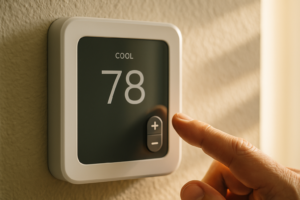
Modern 12000 BTU air conditioners offer programmable thermostats, Wi-Fi connectivity, and smartphone apps for remote control. These features provide convenience while helping reduce energy costs. For example, you can turn your unit on remotely thirty minutes before arriving home, which keeps your Port Charlotte house comfortable without running the AC all day.
Smart features also enable precise temperature scheduling. Program your unit to maintain slightly warmer temperatures when you’re at work and cool down before you return home. Over time, this programming reduces energy consumption by 10% to 20% compared to constant operation at your preferred temperature.
Sleep modes adjust temperature gradually throughout the night, which improves comfort while reducing energy use. Additionally, some units include motion sensors that detect when rooms are unoccupied and adjust cooling accordingly. These intelligent features matter particularly in Florida where every degree of unnecessary cooling wastes money.
Moreover, Wi-Fi-enabled units integrate with smart home systems like Amazon Alexa, Google Home, and Apple HomeKit. This integration allows voice control and coordination with other smart devices. For instance, you can create automation routines that adjust your air conditioner based on weather forecasts or your location tracked through your smartphone.
How Much Does a 12000 BTU Air Conditioner Cost?
The price of a 12000 BTU air conditioner varies dramatically based on unit type, efficiency rating, and installation requirements. Understanding these costs helps Sarasota and Venice homeowners budget appropriately and make informed decisions.
Window air conditioners represent the most affordable option, with basic 12000 BTU models starting around $300 to $500. Mid-range units with better efficiency ratings and features cost $500 to $800. Premium window units with smart controls and very high EER ratings can reach $900 to $1,200. However, these prices don’t include any professional installation, which most homeowners don’t need for window units anyway.
Portable 12000 BTU air conditioners fall in a similar price range, typically costing $400 to $900 for quality models. These units offer installation flexibility but generally provide lower efficiency than window or mini-split options. Therefore, the slightly higher upfront cost often fails to justify the reduced performance and higher operating costs.
Ductless mini-split systems cost significantly more initially but deliver superior performance and efficiency. A single-zone 12000 BTU mini-split system costs $1,500 to $2,500 for the equipment alone. Professional installation adds another $1,000 to $2,000, depending on line set length, electrical requirements, and installation complexity. Total project costs typically range from $2,500 to $4,500 for complete installation.
Operating costs matter as much as purchase price over your unit’s lifespan. A high-efficiency 12000 BTU mini-split operating eight hours daily in North Port conditions costs approximately $30 to $50 monthly in electricity. In contrast, a low-efficiency window unit running the same schedule might cost $60 to $80 monthly. Over five years, the efficiency difference saves $1,800 to $3,600, which easily justifies the higher initial mini-split cost.
Maintenance costs remain relatively low for all 12000 BTU air conditioner types. Annual professional maintenance for mini-split systems costs $100 to $150 in the Punta Gorda and Englewood area. Window and portable units require primarily filter cleaning, which homeowners can do themselves. However, professional cleaning every few years helps maintain efficiency and extends equipment life.
What Room Types Work Best with 12000 BTU Air Conditioners?
Matching your 12000 BTU air conditioner to the right application ensures optimal comfort and efficiency. Certain spaces benefit more from this capacity than others, particularly in Florida’s challenging climate.
Bedrooms represent the ideal application for 12000 BTU units, especially master bedrooms between 350 and 550 square feet. Quality sleep requires comfortable temperatures, and dedicated room cooling often proves more economical than running whole-house systems overnight. Moreover, a mini-split in your Sarasota or Venice bedroom provides whisper-quiet operation that won’t disturb sleep.
Home offices benefit tremendously from independent climate control. Many North Port and Port Charlotte residents work remotely, and a dedicated 12000 BTU unit keeps your office comfortable without cooling the entire house during work hours. Additionally, the improved humidity control prevents equipment damage and creates a more professional environment for video calls.
Bonus rooms, converted garages, and home additions often lack adequate central air conditioning. Installing a 12000 BTU mini-split provides efficient cooling without extending ductwork or overloading existing systems. This solution works particularly well for mother-in-law suites, exercise rooms, or workshop spaces in Osprey and Laurel homes.
Guest bedrooms see intermittent use, which makes whole-house cooling inefficient when hosting visitors. A dedicated 12000 BTU unit allows you to keep guest spaces comfortable only when needed. Furthermore, guests appreciate control over their room temperature, which improves their comfort during Florida summer visits.
Sunrooms and Florida rooms present unique cooling challenges due to extensive window exposure and often-minimal insulation. While 12000 BTU might seem adequate for the square footage, these spaces typically require 15000 to 18000 BTU because of extreme heat gain. Therefore, carefully evaluate exposure and insulation before choosing a unit for these challenging applications.
Common 12000 BTU Air Conditioner Mistakes to Avoid
Understanding common pitfalls helps Florida homeowners make better choices and avoid costly mistakes. These errors frequently lead to poor performance, wasted money, and uncomfortable conditions.
First, many homeowners underestimate the importance of proper sizing. While a 12000 BTU air conditioner works perfectly for many applications, assuming it suits your space without careful calculation leads to problems. Undersized units run constantly, wear out quickly, and never achieve comfortable temperatures. Conversely, oversized units cycle too frequently, fail to dehumidify properly, and waste energy.
Second, focusing solely on purchase price rather than total cost of ownership represents a costly mistake. That $300 window unit seems like a bargain compared to a $3,000 mini-split system. However, over five to seven years, the mini-split’s superior efficiency often makes it the more economical choice. Calculate operating costs based on your expected usage hours and local Englewood or Nokomis electricity rates.
Third, improper installation undermines even the best equipment. DIY mini-split installation appeals to handy homeowners seeking to save money. Nevertheless, improper refrigerant charging, incorrect drain line slope, or inadequate electrical work causes immediate problems and long-term damage. Professional installation ensures optimal performance and protects your warranty coverage.
Fourth, neglecting maintenance accelerates wear and reduces efficiency. Dirty filters force your 12000 BTU air conditioner to work harder, which increases energy consumption and shortens equipment life. Clean or replace filters monthly during heavy use periods. Additionally, schedule annual professional maintenance to catch developing problems before they cause breakdowns during July heat waves in Port Charlotte or Punta Gorda.
Fifth, ignoring humidity control focuses too narrowly on temperature alone. Florida comfort requires managing both temperature and moisture levels. Choose units with strong dehumidification capabilities, and consider running your air conditioner even when temperatures seem acceptable if humidity feels uncomfortable.
Finally, overlooking warranty coverage and support creates problems when issues arise. Reputable manufacturers offer comprehensive warranties, typically three to seven years on parts and up to twelve years on compressors for quality mini-split systems. Verify warranty terms before purchasing, and ensure proper installation by licensed professionals to maintain warranty validity.
Frequently Asked Questions About 12000 BTU Air Conditioners
What size room does a 12000 BTU air conditioner cool?
A 12000 BTU air conditioner typically cools rooms between 400 and 550 square feet under normal conditions. However, Florida’s climate, sun exposure, ceiling height, and insulation quality affect this range significantly.
How much does it cost to run a 12000 BTU air conditioner in Florida?
Operating costs vary based on efficiency and usage, but expect $30 to $80 monthly for a unit running eight hours daily. High-efficiency mini-splits cost less to operate than budget window units despite similar BTU ratings.
What’s the difference between a window unit and mini-split 12000 BTU air conditioner?
Window units install in window frames and cost $300 to $900, while mini-splits feature separate indoor and outdoor components with professional installation costing $2,500 to $4,500 total. Mini-splits offer superior efficiency, quieter operation, and better dehumidification for Florida’s climate.
Can a 12000 BTU air conditioner heat as well as cool?
Many ductless mini-split 12000 BTU units include heat pump technology that provides both cooling and heating. This dual functionality proves useful during Florida’s occasional winter cold snaps, though most window and portable units only cool.
How often should I maintain my 12000 BTU air conditioner?
Clean or replace filters monthly during heavy use periods. Schedule professional maintenance annually for mini-split systems, or every two to three years for window units to maintain efficiency and prevent breakdowns.
Do I need a special electrical outlet for a 12000 BTU air conditioner?
Most 12000 BTU window and portable units operate on standard 115-volt outlets, though some require 230-volt circuits. Mini-split systems typically require dedicated 230-volt circuits installed by licensed electricians to meet Florida building codes.
Will a 12000 BTU air conditioner lower my humidity?
Quality 12000 BTU air conditioners remove moisture while cooling, with mini-splits providing superior dehumidification compared to window or portable units. Proper sizing ensures adequate run time for effective humidity removal in Florida’s muggy climate.
Get Expert Help Choosing Your 12000 BTU Air Conditioner
Selecting the right 12000 BTU air conditioner requires careful consideration of your specific space, budget, and cooling needs. While this guide provides comprehensive information to help you make an informed decision, nothing replaces professional assessment of your unique situation.
Manasota Cooling & Heating serves homeowners throughout North Port, Port Charlotte, Sarasota, Venice, Punta Gorda, Englewood, Nokomis, Osprey, and Laurel with expert air conditioning sales, installation, and service. Our experienced technicians can evaluate your space, calculate precise cooling requirements, and recommend the most efficient and cost-effective solution for your home. We specialize in high-efficiency ductless mini-split systems that deliver superior comfort and energy savings in Florida’s demanding climate. Contact us today for a free consultation and estimate on the perfect cooling solution for your home.