

When you’re considering AC installation Punta Gorda homeowners face unique challenges that go beyond simply choosing the cheapest unit. Between the relentless Florida humidity, summer temperatures that routinely hit the mid-90s, and salt air that can corrode equipment faster than in inland areas, your cooling system needs to be sized correctly, installed properly, and built to handle our demanding coastal climate. This complete guide walks you through everything you need to know before investing in a new air conditioning system for your Punta Gorda home.
Quick Answer: AC installation in Punta Gorda involves professional selection, sizing, and installation of a new air conditioning system designed to handle Southwest Florida’s extreme heat and humidity. The process typically takes one to three days and costs between $5,500 and $12,000 depending on system type, home size, and ductwork condition. Proper installation is critical for efficiency, longevity, and hurricane season reliability.
What Is AC Installation and Why Does It Matter in Punta Gorda?
AC installation is the complete process of removing old cooling equipment and installing a new air conditioning system, including indoor air handlers, outdoor condensers, refrigerant lines, electrical connections, and thermostat controls. In Punta Gorda and surrounding Charlotte County communities, proper installation matters even more than in other parts of the country because our climate pushes systems to their limits nearly year-round.
A correctly installed system will cool your home efficiently, remove humidity effectively, and last 15 to 20 years with regular maintenance. In contrast, even the highest-efficiency unit will underperform, waste energy, and fail prematurely if installed incorrectly. Moreover, improper installation can void manufacturer warranties, leaving you responsible for expensive repairs that should have been covered.
The coastal environment in Punta Gorda presents additional challenges. Salt air accelerates corrosion on outdoor units, humidity can promote mold growth in poorly designed duct systems, and hurricane-force winds demand secure mounting and protection. Furthermore, Florida’s intense UV exposure degrades refrigerant lines and electrical components faster than in northern climates.
SEER ratings measure a system’s energy efficiency by comparing cooling output to energy input over a typical cooling season. A higher SEER rating means lower monthly electric bills, which matters considerably when your AC runs nearly every day from March through November. As of 2023, the minimum SEER rating for new systems installed in Florida is 15, though many homeowners choose 16 to 18 SEER systems for maximum efficiency.
Local building codes in Punta Gorda require proper permitting for AC installations, which ensures your system meets safety standards and hurricane preparation requirements. Professional contractors handle permit applications, inspections, and compliance documentation as part of the installation process. Additionally, proper installation includes load calculations that account for your home’s square footage, insulation levels, window orientation, and occupancy patterns to determine the exact cooling capacity you need.
6 Types of AC Systems Perfect for Punta Gorda Homes
1. Central Air Conditioning Systems
Central air conditioning remains the most common choice for Punta Gorda homeowners because it cools the entire house evenly and integrates with existing ductwork. These systems consist of an outdoor condenser unit, an indoor air handler or furnace with cooling coils, and a network of ducts that distribute conditioned air throughout your home. Central systems work especially well for homes over 1,500 square feet with existing duct systems in good condition.
The main advantage of central AC is consistent, whole-home cooling with a single thermostat. However, these systems require well-maintained ductwork, which can be a challenge in older Punta Gorda homes where ducts may have developed leaks or lost insulation over decades of use. In fact, duct leakage can reduce system efficiency by 20 to 30 percent, making proper duct sealing an essential part of any central AC installation.
2. Ductless Mini-Split Systems
Ductless mini-split systems have gained popularity in Punta Gorda for home additions, renovations, and older homes without existing ductwork. A ductless system consists of one outdoor compressor connected to one or more indoor air handlers through refrigerant lines that require only a small hole through the wall. Each indoor unit can be controlled independently, allowing different temperatures in different rooms.
These systems offer excellent efficiency because they avoid the energy losses associated with ductwork. Moreover, they provide zone cooling that lets you cool occupied rooms while saving energy in unused spaces. Many Punta Gorda homeowners install mini-splits in converted garages, Florida rooms, or master bedroom additions where extending ductwork would be impractical or expensive.
3. Heat Pump Systems
Heat pump systems provide both cooling and heating by transferring heat rather than generating it through combustion. In Punta Gorda’s mild winters, heat pumps offer an energy-efficient alternative to electric resistance heating or gas furnaces. A heat pump looks identical to a standard air conditioner from the outside but includes a reversing valve that allows it to extract heat from outdoor air and move it inside during cooler months.
Because Punta Gorda rarely experiences freezing temperatures, heat pumps operate efficiently throughout our winter season. In addition, heat pumps typically last 15 to 20 years with proper maintenance and offer lower operating costs than traditional heating systems. For homeowners concerned about hurricane preparedness, heat pumps provide reliable heating if natural gas service is disrupted during storm recovery.
4. High-Efficiency Variable-Speed Systems
Variable-speed systems represent the latest advancement in air conditioning technology, using compressors that can operate at multiple speeds rather than simply turning on and off. Variable-speed technology allows the system to run at lower speeds during mild weather, reducing energy consumption while maintaining consistent temperatures and superior humidity control. Humidity control is particularly important in Punta Gorda, where indoor humidity levels above 60 percent can promote mold growth and make homes feel uncomfortable even at reasonable temperatures.
These systems cost more upfront but deliver significant energy savings over their lifespan. Furthermore, variable-speed systems run more quietly than traditional units and create fewer temperature fluctuations throughout the day. For homeowners who plan to stay in their Punta Gorda homes long-term, the investment in variable-speed technology typically pays for itself through lower utility bills within seven to ten years.
5. Package Unit Systems
Package unit systems combine the condenser, compressor, and air handler in a single outdoor cabinet, making them ideal for homes without indoor space for a traditional air handler or furnace. In Punta Gorda, package units work well for manufactured homes, smaller houses, and properties where attic or closet space is limited. The entire system sits outside, connected to ductwork that enters through the wall or floor.
Package units simplify installation and maintenance because all components are accessible from outside the home. However, they require adequate outdoor space and proper protection from hurricane-force winds and storm debris. Professional installation includes secure mounting and protective barriers that meet local building codes for wind resistance.
6. Geothermal Heat Pump Systems
Geothermal heat pump systems use the constant temperature of the ground to provide extremely efficient heating and cooling. While less common in Punta Gorda due to higher installation costs, geothermal systems can reduce energy consumption by 40 to 60 percent compared to conventional systems. These systems circulate fluid through underground pipes that absorb heat in summer and release it in winter, then transfer that thermal energy to your home.
Installation requires excavating your yard to bury ground loops, which increases upfront costs significantly. Nonetheless, geothermal systems last 25 years or more for indoor components and 50-plus years for ground loops, making them a worthwhile investment for homeowners planning to stay in their Punta Gorda properties for decades.
What to Expect During Professional AC Installation in Punta Gorda
The AC installation process begins with a comprehensive home assessment where your contractor evaluates your cooling needs, inspects existing ductwork, measures your home’s square footage, and performs load calculations. Load calculations determine the precise cooling capacity required based on factors like insulation levels, window types, ceiling heights, and heat gain from appliances and occupants. Oversized systems cycle on and off too frequently, reducing efficiency and humidity control, while undersized systems run constantly without achieving comfortable temperatures.
After selecting the appropriate system, your contractor obtains necessary permits from the City of Punta Gorda or Charlotte County building department. Permit requirements ensure your installation meets electrical codes, refrigerant handling regulations, and hurricane preparation standards. Skipping this step can result in fines, failed home inspections when you sell, and voided equipment warranties.
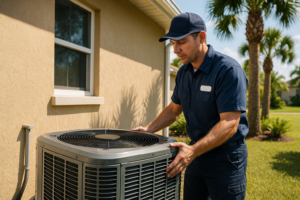
On installation day, the crew begins by safely removing your old system, including recovering refrigerant according to EPA regulations. The Environmental Protection Agency requires proper refrigerant recovery to prevent harmful chemicals from entering the atmosphere. Next, technicians install the new outdoor condenser on a secure concrete pad or wall-mounted brackets designed to withstand hurricane-force winds.
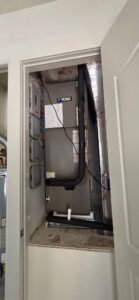
Inside your home, installers position the air handler, connect refrigerant lines, and integrate the system with your thermostat. If your installation includes ductwork modifications, technicians seal all connections with mastic or metal-backed tape and insulate ducts in unconditioned spaces. Proper duct sealing prevents energy waste and ensures maximum system efficiency.
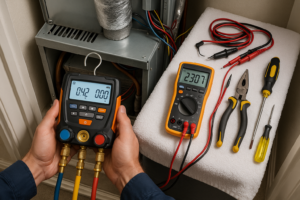
The final installation steps include charging the system with the correct amount of refrigerant, testing all electrical connections, calibrating the thermostat, and verifying proper airflow throughout your home. Your installer should demonstrate system operation, explain maintenance requirements, and provide warranty documentation before completing the job. Professional installers typically complete installation in one to three days depending on system complexity and any necessary ductwork modifications.
Following installation, a building inspector visits your home to verify code compliance and approve the work. This inspection protects you by confirming that installation meets safety standards and manufacturer specifications. Once approved, your contractor removes old equipment for proper recycling and cleanup, leaving your property clean and your new system ready for Florida’s demanding climate.
How to Choose the Right AC Installation Contractor in Punta Gorda
Selecting the right contractor for AC installation Punta Gorda homeowners trust starts with verifying proper licensing and insurance. In Florida, HVAC contractors must hold a state-certified license (CAC number) or county-certified license, which requires passing examinations demonstrating technical knowledge and code compliance. Always ask to see license numbers and verify them through the Florida Department of Business and Professional Regulation website.
Insurance coverage protects you if workers are injured on your property or if installation errors cause damage to your home. Request certificates of insurance showing both general liability coverage and workers’ compensation insurance. Reputable contractors provide this documentation immediately without hesitation.
Experience with Punta Gorda’s specific climate challenges matters significantly. Contractors familiar with coastal installations understand salt air corrosion prevention, hurricane preparation requirements, and the humidity control demands that differentiate our area from inland Florida communities. Ask how long the company has served Punta Gorda, Port Charlotte, Venice, and surrounding Southwest Florida areas.
Written estimates should itemize all costs including equipment, labor, permits, disposal fees, and any ductwork modifications. Be wary of contractors who provide verbal estimates or pressure you to sign immediately. In contrast, professional contractors encourage you to compare multiple bids and take time to make an informed decision.
References from recent Punta Gorda customers provide valuable insight into contractor reliability, work quality, and customer service. Ask for at least three local references and actually call them to discuss their experience. Additionally, check online reviews on Google, Facebook, and the Better Business Bureau to identify patterns of satisfaction or complaints.
Manufacturer certifications indicate that contractors have received specialized training on specific equipment brands. Certified contractors often provide better warranties, access to technical support, and expertise with advanced features like variable-speed technology or smart thermostats. Furthermore, some manufacturers extend warranty coverage only when certified contractors perform installation.
Payment terms should never require full payment upfront. Standard practice involves a deposit to order equipment, a progress payment when installation begins, and final payment upon successful completion and inspection. Contractors who demand cash payments or full payment before starting work raise red flags that should make you reconsider.
For homeowners exploring options in nearby communities, our AC Installation Port Charlotte: Complete Guide 2026 covers similar considerations with location-specific details for that area.
How Much Does AC Installation Cost in Punta Gorda?
AC installation costs in Punta Gorda typically range from $5,500 to $12,000 for complete system replacement, though prices vary based on system type, home size, efficiency ratings, and installation complexity. Understanding the factors that influence pricing helps you budget appropriately and compare contractor estimates accurately.
System size represents the largest cost variable, measured in tons of cooling capacity. A ton refers to the amount of heat required to melt one ton of ice in 24 hours, equivalent to 12,000 BTUs per hour. Most Punta Gorda homes require 2.5 to 5 tons of cooling capacity, with larger homes demanding proportionally larger systems. A basic 3-ton, 14-SEER system typically costs $5,500 to $7,500 installed, while a high-efficiency 4-ton, 18-SEER variable-speed system may cost $9,000 to $12,000.
Efficiency ratings directly impact price, with higher-SEER systems costing more upfront but saving money through reduced energy consumption. According to Energy Star, upgrading from a 10-year-old system to a modern high-efficiency unit can reduce cooling costs by 20 to 40 percent. In Punta Gorda’s climate where air conditioning accounts for 40 to 60 percent of summer electric bills, these savings add up quickly.
Ductwork condition significantly affects installation costs. Homes with well-maintained ducts in good condition require minimal ductwork expense, while properties with leaky, uninsulated, or inadequately sized ducts may need $1,500 to $4,000 in duct repairs or replacement. Older Punta Gorda homes built before modern efficiency standards often require ductwork upgrades to achieve optimal system performance.
Installation complexity adds costs for challenging installations. Factors like difficult equipment access, attic modifications, electrical panel upgrades, or structural reinforcements for hurricane protection can increase labor expenses. Conversely, straightforward replacements where the new system matches the old configuration typically fall toward the lower end of the price range.
System type affects pricing substantially. Central air conditioning systems generally cost less than ductless mini-splits per ton of capacity, but mini-splits eliminate ductwork expenses for homes without existing ducts. Geothermal systems cost two to three times more than conventional systems upfront despite offering superior long-term efficiency.
Financing options help homeowners manage installation costs through monthly payments rather than large upfront expenses. Many contractors offer financing programs with promotional periods of zero-percent interest, making high-efficiency systems more accessible. Additionally, utility company rebates and manufacturer incentives can reduce net costs by $300 to $1,000 for qualifying high-efficiency systems.
Permit fees in Punta Gorda typically add $150 to $300 to installation costs. While this may seem like an unnecessary expense, proper permitting protects your investment by ensuring code compliance and maintaining your home’s resale value. Unpermitted work can cause problems during home sales when buyers’ inspectors discover non-compliant installations.
7 Critical Questions to Ask Before AC Installation in Punta Gorda
1. What Size System Does My Home Actually Need?
Proper sizing requires Manual J load calculations that account for your home’s specific characteristics rather than rules of thumb like square footage alone. Oversized systems waste energy and money while undersized systems run constantly without maintaining comfort. Professional contractors spend time measuring your home, evaluating insulation, and calculating heat gain before recommending system capacity.
2. How Will You Protect My System During Hurricane Season?
Hurricane preparation includes secure mounting that meets Florida building codes, protective barriers around outdoor units, and surge protection for electrical components. Ask contractors specifically how they anchor condensers and what wind ratings their installation methods achieve. Punta Gorda sits in a hurricane-prone zone where proper installation techniques can mean the difference between minor damage and total system loss during storms.
3. What Warranty Coverage Comes With Installation?
Comprehensive warranty coverage includes both manufacturer equipment warranties and contractor labor warranties. Equipment warranties typically cover parts for 5 to 10 years, while labor warranties should cover installation workmanship for at least one year. Extended warranties may be available for additional cost, providing longer protection against unexpected repairs.
4. How Long Will Installation Take and What Disruptions Should I Expect?
Most installations take one to three days depending on system complexity and ductwork modifications. Contractors should explain the installation timeline, when your home will be without air conditioning, and what access they need to your property. Professional installers minimize disruptions by protecting floors, containing dust, and cleaning thoroughly before completing work.
5. What Maintenance Will My New System Require?
All air conditioning systems require regular maintenance including filter changes every one to three months, annual professional tune-ups, and periodic outdoor unit cleaning. Ask contractors about maintenance agreements that provide scheduled service, priority emergency response, and potential discounts on repairs. Regular maintenance extends equipment life and maintains efficiency throughout the system’s lifespan.
6. Can You Improve My Indoor Air Quality During Installation?
Installation presents an opportunity to upgrade indoor air quality through whole-home air purifiers, UV lights that kill mold and bacteria, or enhanced filtration systems. Punta Gorda’s humidity promotes mold growth, making air quality improvements particularly valuable. Additionally, properly sized dehumidification ensures comfortable indoor humidity levels year-round.
7. What Financing Options Are Available?
Understanding payment options helps you choose the best system for your needs rather than settling for a cheaper unit due to budget constraints. Ask about financing terms, interest rates, qualification requirements, and any promotional periods. Many homeowners find that monthly payments for a high-efficiency system cost less than the energy savings compared to financing a lower-efficiency unit.
Frequently Asked Questions About AC Installation in Punta Gorda
How long does AC installation take in Punta Gorda?
Most AC installations in Punta Gorda take one to three days from start to finish, depending on system type and installation complexity. Straightforward replacements where the new system matches existing equipment typically complete in one day, while installations requiring ductwork modifications or electrical upgrades may take two to three days. Your contractor provides a specific timeline after evaluating your home.
What is the average cost of AC installation in Punta Gorda?
The average cost of AC installation in Punta Gorda ranges from $5,500 to $12,000 for complete system replacement, with most homeowners spending around $7,500 for a mid-efficiency central air system. Costs vary based on system size, efficiency rating, ductwork condition, and installation complexity. High-efficiency variable-speed systems and homes requiring ductwork upgrades fall toward the higher end of this range.
Do I need a permit for AC installation in Punta Gorda?
Yes, AC installation in Punta Gorda requires building permits to ensure work meets Florida building codes, electrical standards, and hurricane preparation requirements. Professional contractors obtain permits, coordinate inspections, and provide documentation as part of their service. Installing systems without permits can result in fines, warranty issues, and problems during home sales.
How do I know what size AC unit I need for my Punta Gorda home?
Determining the correct AC size requires professional Manual J load calculations that account for your home’s square footage, insulation levels, window types, ceiling heights, and heat gain characteristics. Rules of thumb suggesting 400 to 600 square feet per ton often produce inaccurate results. Professional contractors perform detailed calculations to specify the exact capacity your home needs for optimal efficiency and comfort.
Can I install AC myself to save money in Punta Gorda?
While homeowners can legally install their own AC systems in Florida, doing so is strongly discouraged due to complexity, safety risks, and code requirements. Improper installation voids manufacturer warranties, creates fire and refrigerant leak hazards, and typically fails to meet permitting requirements. Professional installation ensures safety, efficiency, warranty protection, and code compliance.
What SEER rating should I choose for my Punta Gorda home?
For Punta Gorda homes, systems with SEER ratings between 16 and 18 offer the best balance of upfront cost and long-term energy savings given our extended cooling season. The minimum legal SEER rating in Florida is 15, but higher-rated systems reduce monthly electric bills significantly. Homeowners planning to stay in their homes more than five years typically benefit from investing in higher-efficiency systems.
How often should I replace my AC system in Punta Gorda?
Most AC systems in Punta Gorda last 12 to 18 years with regular maintenance, though coastal salt air and heavy usage can shorten lifespans. Systems showing frequent breakdowns, rising energy bills, inconsistent cooling, or approaching 15 years old should be evaluated for replacement. Replacing aging systems before catastrophic failure allows you to choose equipment on your timeline rather than during emergency situations.
What brands are best for Punta Gorda’s climate?
Top AC brands for Punta Gorda include Trane, Carrier, Lennox, Rheem, and American Standard, all of which manufacture systems designed for Florida’s demanding climate. More important than brand name, however, is proper sizing and professional installation by experienced contractors. Even premium equipment underperforms if installed incorrectly, while mid-range systems installed properly deliver excellent results.
Should I choose a heat pump or traditional AC in Punta Gorda?
Heat pumps make excellent sense for Punta Gorda homes because they provide efficient heating during mild winters while delivering cooling performance identical to traditional AC systems. Since Punta Gorda rarely experiences freezing temperatures, heat pumps operate efficiently year-round and eliminate the need for separate heating systems. Most new installations in Southwest Florida use heat pump technology.
How can I prepare my Punta Gorda home for AC installation?
Preparing for AC installation includes clearing access paths to your current system, removing items from areas where installers will work, ensuring pets are secured, and discussing any concerns with your contractor beforehand. Professional installers protect your home with drop cloths and coverings, but clearing clutter helps them work efficiently. Additionally, plan to be home during installation to answer questions and approve work as it progresses.
Schedule Your AC Installation With Manasota Cooling & Heating Today
Choosing the right contractor for AC installation in Punta Gorda protects your investment and ensures decades of reliable cooling comfort. At Manasota Cooling & Heating, we’ve served Punta Gorda, Port Charlotte, Venice, North Port, Englewood, Nokomis, Osprey, Laurel, and Sarasota communities for years with honest advice, expert installation, and dependable service. Our certified technicians perform detailed load calculations, handle all permitting requirements, and install systems built to withstand Florida’s toughest conditions including hurricane-force winds, relentless humidity, and corrosive salt air. We offer transparent pricing, comprehensive warranties, and flexible financing options that make high-efficiency systems accessible to every budget. Contact Manasota Cooling & Heating today for a free, no-pressure consultation and discover why your Punta Gorda neighbors trust us with their cooling comfort year after year.