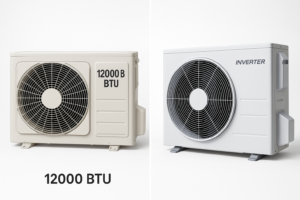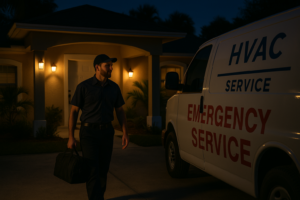


When your air conditioning fails at 2 a.m. on a sweltering Florida night, you need 24 hour air conditioning service that responds quickly and fixes the problem right. In our region spanning North Port, Sarasota, Venice, and Port Charlotte, summer temperatures regularly exceed 90 degrees with humidity levels that make indoor comfort impossible without a working AC system. Understanding what 24 hour air conditioning service includes, how much it costs, and when you truly need emergency help can save you money while protecting your family’s comfort and safety during Florida’s most brutal weather conditions.
Quick Answer: 24 hour air conditioning service provides emergency repair, maintenance, and replacement assistance for homeowners whose AC systems fail outside normal business hours. In Florida, these services typically cost $150 to $450 for after-hours calls, with technicians arriving within 1 to 3 hours to restore cooling. Most companies charge premium rates for nights, weekends, and holidays to cover technician availability and rapid response times.
What Is 24 Hour Air Conditioning Service?
24 hour air conditioning service refers to emergency HVAC repair and maintenance available any time of day or night, including weekends and holidays. This round-the-clock availability ensures that homeowners can get immediate help when their cooling systems fail during Florida’s hottest periods or most inconvenient times. Unlike standard HVAC service that operates during regular business hours, 24 hour service maintains on-call technicians who respond to urgent cooling emergencies regardless of when they occur.
The service covers a wide range of urgent AC problems. Technicians handle complete system failures, refrigerant leaks, electrical malfunctions, thermostat failures, and compressor breakdowns that leave homes uncomfortably hot. In Florida’s climate, where indoor temperatures can quickly reach dangerous levels without air conditioning, this immediate response protects both comfort and health, particularly for elderly residents, young children, and anyone with medical conditions sensitive to heat.
Emergency service differs significantly from scheduled maintenance or routine repairs. When you call for 24 hour air conditioning help, you’re requesting immediate dispatch of a qualified technician who arrives equipped to diagnose and fix common AC problems on the spot. These emergency calls typically receive priority over scheduled appointments, ensuring that technicians reach your home within one to three hours in most cases throughout the Sarasota, North Port, and Venice areas.
The definition of “emergency” matters when considering after-hours service. A true air conditioning emergency involves complete system failure during extreme heat, dangerous indoor temperatures affecting vulnerable family members, or significant water leaks that risk property damage. However, if your AC is simply running less efficiently or making unusual sounds but still providing some cooling, you can often wait until normal business hours to save the premium emergency service fees.
6 Signs You Need 24 Hour Air Conditioning Service Right Now
1. Complete System Failure During Extreme Heat
Your air conditioner has stopped working entirely, and outdoor temperatures exceed 85 degrees with high humidity. This situation qualifies as a genuine emergency in Florida, where indoor temperatures can quickly climb above 90 degrees without cooling. Moreover, the combination of heat and humidity creates dangerous conditions for children, elderly family members, and anyone with respiratory issues or heart conditions that make them vulnerable to heat-related illness.
A complete system failure means no air flows from your vents, your thermostat shows no response when you adjust settings, or your outdoor compressor unit remains completely silent despite the thermostat calling for cooling. In these cases, waiting until morning or Monday could mean spending 12 to 48 hours in unsafe indoor conditions. Additionally, prolonged exposure to extreme indoor heat can damage electronics, warp wood furniture, and create conditions that promote mold growth in your home’s humid environment.
2. Water Leaking Inside Your Home
You discover water pooling around your indoor air handler unit or dripping through your ceiling from the attic where your AC system sits. Water leaks from air conditioning systems indicate blocked condensate drains, frozen evaporator coils that have thawed, or disconnected drain lines that can quickly cause thousands of dollars in water damage to ceilings, walls, and flooring. Furthermore, standing water creates ideal conditions for mold growth, which can begin developing within 24 to 48 hours in Florida’s humid climate.
Emergency service becomes essential when water actively flows rather than slowly drips, when leaks occur near electrical panels or wiring, or when water has already saturated drywall or ceiling materials. A qualified technician can identify whether the leak stems from a simple clogged drain line that requires clearing or a more serious problem like a cracked drain pan or failed condensate pump. Meanwhile, you should turn off your AC system and place towels or buckets to catch water until the technician arrives, preventing additional damage to your home.
3. Burning Smell or Visible Smoke
Your air conditioning system produces a burning odor, electrical smell, or visible smoke when it runs. These symptoms indicate serious electrical problems, overheating motors, or failing components that pose fire hazards requiring immediate attention. In fact, according to the National Fire Protection Association, HVAC equipment contributes to thousands of residential fires annually, with electrical malfunctions representing a leading cause.
The specific type of smell provides clues about the problem. A burning plastic odor suggests melting wire insulation or failing electrical components, while an acrid electrical smell indicates arcing connections or motor windings that have overheated. A musty burning smell might mean accumulated dust on heating elements burning off, which is less urgent but still warrants inspection. However, any smell accompanied by smoke, sparking sounds, or circuit breakers that repeatedly trip demands immediate system shutdown and emergency service to prevent potential fire hazards in your Englewood, Osprey, or Nokomis home.
4. Refrigerant Leak With Visible Ice Formation
You notice ice forming on your outdoor compressor unit, indoor air handler, or refrigerant lines, accompanied by hissing sounds or oily residue around AC components. Refrigerant leaks not only prevent your system from cooling effectively but also waste expensive refrigerant and can damage your compressor, the most costly component in your air conditioning system. Therefore, continuing to run an AC with a refrigerant leak typically causes additional damage that transforms a moderate repair into a major expense.
Ice formation occurs because low refrigerant levels cause evaporator coils to drop below freezing temperatures, creating frost buildup that blocks airflow and further reduces cooling capacity. Consequently, your system runs continuously without effectively cooling your home, driving up electricity costs while providing minimal comfort. A 24 hour technician can locate the leak, repair it, evacuate remaining refrigerant, and recharge your system to proper levels, restoring efficient operation and preventing compressor damage that could cost $1,500 to $3,000 to replace.
5. No Cooling During Heat Advisory or Hurricane Recovery
The National Weather Service has issued a heat advisory for your area, or you’re recovering from a hurricane or tropical storm with no power restoration timeline. During these critical periods, 24 hour air conditioning service becomes essential for vulnerable populations who cannot safely shelter in place without cooling. Heat advisories typically occur when the heat index reaches 105 to 110 degrees, creating dangerous conditions where heat exhaustion and heat stroke risks increase significantly.
After hurricanes, many Florida homeowners discover AC damage from power surges, fallen trees, wind-blown debris, or extended power outages that allowed moisture and pests into outdoor units. In Punta Gorda, North Port, and Port Charlotte, areas that experienced significant hurricane impacts in recent years, emergency HVAC service becomes crucial for making homes habitable again. Emergency technicians can assess storm damage, determine whether repairs are possible, and implement temporary cooling solutions if replacement parts require ordering or if your system needs complete replacement.
6. Medical Emergency or Vulnerable Occupants
A household member with a medical condition requires climate-controlled temperatures, including infants, elderly residents, or anyone with chronic conditions like multiple sclerosis, heart disease, or respiratory illnesses. For these individuals, air conditioning represents more than comfort because it constitutes a medical necessity that prevents dangerous health complications. Consequently, loss of cooling in Florida’s climate creates a legitimate emergency that justifies after-hours service calls.
Medical conditions affected by heat include medications that impair the body’s ability to regulate temperature, conditions that cause excessive sweating or dehydration, and diseases that worsen with heat exposure. Additionally, infants lack fully developed temperature regulation systems, making them vulnerable to overheating, while elderly individuals often have reduced heat tolerance and may not recognize dangerous symptoms until serious problems develop. In these situations, calling for 24 7 emergency HVAC service protects health and potentially saves lives, making premium service fees a worthwhile investment.
How Does 24 Hour Air Conditioning Service Work?
Emergency air conditioning service follows a streamlined process designed to restore your cooling quickly. When you call a 24 hour HVAC company, a dispatcher or answering service gathers basic information about your problem, verifies your location, and estimates arrival times based on technician availability and your address. Most reputable companies in the Sarasota and Venice areas maintain on-call rotation schedules that ensure qualified technicians are always available to respond to emergencies throughout their service territory.
The dispatcher asks targeted questions to help the responding technician prepare appropriately. These questions cover symptoms you’ve observed, when the problem started, whether you smell anything unusual, if you’ve checked your circuit breaker panel, and if you’ve noticed any water leaks or ice formation. This information helps the technician bring likely replacement parts and necessary equipment, reducing the chance of multiple trips and speeding up your repair. Furthermore, dispatchers can provide immediate guidance on safety steps, such as turning off your system if you smell burning odors or shutting off water to prevent leak damage.
Once dispatched, the technician typically arrives within one to three hours, depending on your location and current call volume. Upon arrival, the technician performs a systematic diagnostic evaluation to identify the root cause of your AC failure. This process includes checking thermostat settings and operation, inspecting electrical connections and voltage levels, measuring refrigerant pressures, examining your condensate drain system, and testing capacitors, contactors, and other electrical components that commonly fail.
After diagnosing the problem, the technician explains the issue in plain language, describes necessary repairs, and provides a detailed cost estimate before starting work. Reputable emergency services never begin repairs without your approval of the costs. For straightforward problems like failed capacitors, tripped breakers, or clogged drain lines, technicians can typically complete repairs immediately and restore your cooling within an hour or two. However, more complex issues requiring specialized parts might necessitate temporary solutions and a follow-up appointment during regular business hours.
What Causes AC Emergencies in Florida Homes?
Understanding common causes of air conditioning emergencies helps homeowners take preventive steps and recognize warning signs before complete failures occur. Florida’s unique climate creates specific challenges that don’t affect homeowners in other regions. The combination of extreme heat, high humidity, salt air in coastal areas, frequent thunderstorms, and extended cooling seasons that run eight to ten months annually places extraordinary demands on residential AC systems.
Electrical component failures represent the most common cause of sudden AC breakdowns. Capacitors, which provide the electrical boost needed to start compressor and fan motors, typically last three to five years in Florida’s heat but can fail suddenly, leaving your system unable to start or run efficiently. Contactors, which are electrical switches that control power flow to major components, develop pitted or burned contacts that prevent proper operation. Circuit breakers can trip due to electrical surges, overloaded circuits, or short circuits within the AC system, cutting power and stopping cooling entirely.
Refrigerant leaks develop gradually but can suddenly reach critical levels that prevent cooling. Refrigerant is the substance that absorbs heat from indoor air and releases it outdoors, making cooling possible. Small leaks in line connections, coils, or joints slowly reduce refrigerant levels until your system can no longer maintain comfortable temperatures. Consequently, homeowners often notice gradually declining cooling performance over weeks or months before the system fails completely during a particularly hot spell when they need it most.
Condensate drain clogs cause numerous emergency calls throughout the Sarasota region. Your air conditioner removes humidity from indoor air, producing 15 to 20 gallons of water daily that must drain away through a dedicated condensate system. These drain lines can clog with algae, mold, dirt, and debris, causing water to back up and overflow from the drain pan. Modern systems include safety switches that shut down the AC when water levels rise too high, preventing water damage but also stopping all cooling until the drain clears.
Compressor failures represent the most serious and expensive AC emergencies. The compressor is the heart of your air conditioning system, pressurizing refrigerant and circulating it through the cooling cycle. Compressors fail due to electrical problems, refrigerant leaks that cause them to run without proper lubrication, overheating from dirty coils, or simply reaching the end of their 12 to 15 year lifespan. Unfortunately, compressor replacement often costs $1,500 to $3,500, and many homeowners with older systems choose complete system replacement rather than investing heavily in aging equipment.
How Much Does 24 Hour Air Conditioning Service Cost?
Emergency air conditioning service costs significantly more than standard business-hour repairs due to premium charges for technician availability, rapid response, and after-hours labor. In the North Port, Port Charlotte, and Venice areas, homeowners typically pay $150 to $250 just for the emergency service call, which covers the technician’s arrival, diagnostic evaluation, and trip costs. This fee usually applies toward repair costs if you proceed with the work, but you’ll owe it even if you decline repairs or if the technician determines your problem requires parts that must be ordered.
After-hours labor rates run 1.5 to 2.5 times higher than standard rates. Therefore, if a company charges $125 per hour during regular business hours, you might pay $185 to $310 per hour for evening, overnight, weekend, or holiday service. These premium rates compensate technicians for being on call and available outside normal hours, covering the company’s costs for maintaining 24 hour availability year-round. Consequently, a repair that would cost $400 during business hours might reach $600 to $750 as an emergency call.
Parts costs remain consistent regardless of when you call, but emergency situations sometimes require temporary fixes using materials the technician carries, followed by permanent repairs during business hours. For example, if your compressor fails at midnight, the technician might install a temporary bypass or make electrical adjustments to restore limited cooling until a new compressor arrives. Additionally, some specialized components aren’t practical to stock in service vehicles, meaning overnight parts orders might add one to three days to complete repairs.
Common emergency repairs and their typical after-hours costs include capacitor replacement ($250 to $400), contactor replacement ($275 to $425), condensate drain clearing ($200 to $350), refrigerant leak repair and recharge ($450 to $850), blower motor replacement ($600 to $950), and thermostat replacement ($225 to $500). Complete compressor failure typically requires next-day service with costs ranging from $1,800 to $4,000 for emergency replacement. Meanwhile, total system replacement starts around $4,500 to $8,000 for emergency installation, though most companies recommend waiting for business hours for this major investment to ensure proper equipment selection and installation.
Payment policies for emergency service often differ from standard appointments. Many 24 hour HVAC companies require payment in full at service completion for after-hours calls, accepting major credit cards, debit cards, and sometimes cash but not offering payment plans or financing for emergency work. However, some homeowner’s insurance policies cover emergency HVAC repairs, and home warranty programs typically include coverage, though you’ll need to follow specific claim procedures. Therefore, reviewing your coverage before emergencies arise helps you understand your financial responsibility and avoid surprises.
When Should You Wait for Business Hours Instead?
Not every air conditioning problem requires expensive emergency service. Learning to distinguish between true emergencies and issues that can wait until morning or Monday saves money while ensuring you get appropriate help when you genuinely need it. In fact, many situations homeowners initially perceive as emergencies can be safely managed with temporary measures until regular business hours arrive.
If your AC is running but not cooling well, you can typically wait for business hours. Reduced cooling effectiveness suggests problems like low refrigerant, dirty coils, or failing components that developed gradually rather than sudden catastrophic failures. Therefore, you can use fans, open windows during cooler evening hours, close blinds to block solar heat, and minimize heat-generating activities like cooking or running appliances until a technician can evaluate your system during standard hours at standard rates.
Unusual noises warrant attention but rarely constitute true emergencies. If your system makes rattling, buzzing, or grinding sounds but continues providing cooling, schedule a regular appointment to investigate. However, if loud squealing accompanies complete loss of cooling, or if you hear electrical sparking or popping sounds, the situation becomes urgent. Similarly, strange odors that smell musty or dusty can wait, but acrid electrical smells or burning odors require immediate system shutdown and emergency service.
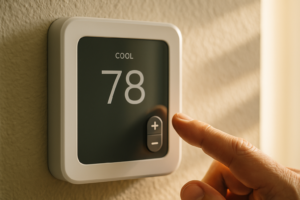
Thermostat problems often seem like emergencies but frequently involve simple fixes you can handle yourself. Before calling for emergency service, replace thermostat batteries, verify that you’ve set the system to “cool” mode rather than “heat” or “off,” ensure the temperature setting is below current room temperature, and check that your circuit breaker hasn’t tripped. Additionally, some thermostats include safety lockouts that reset after 5 to 10 minutes, meaning patient waiting might restore operation without any service call.
Outdoor temperature considerations affect the urgency calculation. If overnight lows will drop into the comfortable 70s, you can safely wait until morning even if your AC fails in the evening. Similarly, if the weather forecast shows a cool front arriving within 24 hours, temporary discomfort might be preferable to premium emergency charges. However, when temperatures will remain above 85 degrees for days, or when heat indices exceed 100 degrees, paying for emergency service protects your health and comfort more cost-effectively than alternative cooling methods like hotel rooms.
7 Ways to Avoid Needing 24 Hour Air Conditioning Service
1. Schedule Preventive Maintenance Twice Yearly
Regular professional maintenance represents your single most effective strategy for preventing AC emergencies. During maintenance visits, technicians inspect electrical connections, clean coils, check refrigerant levels, test capacitors and contactors, clear condensate drains, and identify components approaching failure before they break down. Consequently, homeowners who maintain their systems experience 50% to 70% fewer emergency breakdowns and extend equipment lifespan by three to seven years compared to those who skip maintenance.
Spring maintenance before cooling season starts prepares your system for the demanding summer months ahead. Technicians verify that your AC can handle the heat, replace aging components proactively, and optimize performance for maximum efficiency. Fall maintenance after summer’s heavy use identifies damage from the intense operating season, ensures your system can provide heating during winter if equipped with a heat pump, and prepares equipment for the milder months when less intensive operation gives components time to rest before next year’s summer assault.
2. Change Air Filters Every 30 to 60 Days
Dirty air filters cause numerous AC problems that can escalate into emergencies. A clogged filter restricts airflow, causing your system to work harder, run longer, and place excessive stress on the blower motor and other components. Moreover, restricted airflow can cause evaporator coils to freeze, creating ice buildup that blocks cooling and can lead to compressor damage if you continue operating the system. Therefore, replacing disposable filters monthly or cleaning reusable filters keeps your system running efficiently and reduces breakdown risks.
Filter replacement costs just $3 to $25 depending on filter type and quality, making it the most cost-effective maintenance task you can perform. Additionally, clean filters improve indoor air quality by capturing dust, pollen, pet dander, and other particles that would otherwise circulate through your Osprey, Laurel, or Nokomis home. Setting smartphone reminders for filter changes ensures you don’t forget this simple but critical task that prevents expensive emergency repairs.
3. Keep Outdoor Unit Clear and Clean
Your outdoor condenser unit needs unobstructed airflow to dissipate heat effectively and maintain efficient operation. Consequently, you should keep the area around your outdoor unit clear by trimming vegetation to maintain at least 2 feet of clearance on all sides, removing fallen leaves and yard debris monthly, avoiding storing items against or near the unit, and ensuring landscaping doesn’t gradually encroach on the equipment. Furthermore, coastal homeowners in Punta Gorda and Port Charlotte should periodically rinse salt deposits from outdoor coils using a gentle spray from a garden hose.
Dirty outdoor coils reduce cooling efficiency and cause your compressor to work harder and run hotter, increasing failure risks. While professional coil cleaning during annual maintenance provides the most thorough results, homeowners can perform basic cleaning by turning off power to the unit, removing visible debris, and gently spraying coils from inside out to push dirt away from the fins. However, avoid using pressure washers or aggressive cleaning that can bend delicate aluminum fins, reducing airflow and efficiency.
4. Address Small Problems Before They Become Emergencies
Strange sounds, reduced cooling performance, unusual cycles, rising energy bills, and other warning signs indicate developing problems that will eventually cause failures. Therefore, calling for service when you first notice something wrong allows technicians to make minor repairs before small issues cascade into major breakdowns. For example, a failing capacitor that causes slow starting might cost $150 to replace proactively but can damage your compressor if ignored, ultimately requiring $2,000+ in repairs.
Many homeowners postpone repairs due to cost concerns, but this approach typically backfires. A refrigerant leak that would cost $300 to repair when first detected can damage your compressor over subsequent months, transforming a moderate expense into a major one. Similarly, ignoring unusual sounds that indicate bearing wear allows the problem to progress until motors fail completely. Ultimately, addressing problems promptly saves money while reducing the chance that your system fails at the worst possible time.
5. Upgrade Your Thermostat to a Smart Model
Modern smart thermostats include features that prevent AC emergencies while reducing operating costs. These devices monitor system performance, detect problems like short cycling or extended run times, send maintenance reminders to your smartphone, and alert you to potential failures before they cause complete breakdowns. Moreover, smart thermostats prevent extreme temperature settings that stress your system, automatically adjust for optimal efficiency, and learn your preferences to minimize unnecessary operation.
Smart thermostats also protect your AC when you’re away from home. They can detect if your system fails while you’re traveling and send immediate alerts, allowing you to arrange service before your home becomes dangerously hot or water leaks cause damage. Some models integrate with whole-home monitoring systems that detect refrigerant leaks, unusual sounds, or electrical problems, providing early warning of issues that would otherwise go unnoticed until catastrophic failure occurs.
6. Install Surge Protection for Your AC System
Florida experiences more lightning strikes than any other state, and the powerful electrical surges from nearby strikes frequently damage air conditioning systems. A direct strike to your home can destroy all electronics, including your entire HVAC system, but even distant strikes send damaging voltage spikes through power lines that burn out circuit boards, fry capacitors, and destroy compressor motors. Consequently, whole-home surge protection represents crucial insurance for your expensive cooling equipment.
Two types of surge protection work together for maximum protection. Whole-home surge protectors install at your electrical panel and defend against large surges entering through utility lines, typically costing $400 to $800 for professional installation. Point-of-use surge protectors install directly at your AC disconnect box and protect against smaller surges that slip past whole-home devices, costing $150 to $300 installed. Together, these devices prevent thousands of dollars in AC damage while providing peace of mind during Florida’s intense thunderstorm season.
7. Ensure Proper Insulation and Home Sealing
Your air conditioning system works harder and faces greater failure risks when your home’s building envelope allows conditioned air to escape and hot, humid outdoor air to infiltrate. Poor insulation, air leaks around doors and windows, gaps where utilities penetrate walls, and inadequate attic ventilation force your AC to run longer and more frequently, accelerating component wear and increasing breakdown probability. Therefore, improving your home’s efficiency reduces stress on your cooling system while lowering energy costs.
Key improvements include adding attic insulation to R-30 or R-38 levels recommended for Florida, sealing air leaks with caulk and weatherstripping, upgrading to energy-efficient windows or adding window film to reduce solar heat gain, and ensuring attic ventilation removes superheated air that radiates through ceilings. These improvements reduce your cooling load by 15% to 30%, allowing your AC to cycle on and off normally rather than running continuously during peak heat. Consequently, components last longer, efficiency improves, and emergency breakdown risks decrease substantially throughout your North Port, Sarasota, or Venice home.
Frequently Asked Questions About 24 Hour Air Conditioning Service
What is 24 hour air conditioning service in Florida?
24 hour air conditioning service provides emergency HVAC repair and maintenance any time of day or night throughout the year. In Florida, this service helps homeowners restore cooling when systems fail during extreme heat, at night, on weekends, or during holidays when most HVAC companies are closed. Emergency technicians arrive within 1 to 3 hours to diagnose problems and complete repairs immediately when possible.
How much does emergency AC service cost in Sarasota and North Port?
Emergency air conditioning service in the Sarasota area typically costs $150 to $250 for the service call, plus $185 to $310 per hour for labor, which runs 1.5 to 2.5 times standard rates. Common after-hours repairs range from $250 for capacitor replacement to $850 for refrigerant leak repair and recharge. Homeowners in North Port, Venice, and Port Charlotte pay similar rates for 24 hour service throughout the region.
When should you call for 24 hour air conditioning help?
You should call for 24 hour air conditioning service when your system completely fails during extreme heat, when you smell burning odors or see smoke, when water leaks actively inside your home, when household members have medical conditions requiring climate control, or during heat advisories. If your AC still provides some cooling and temperatures remain moderate, waiting until business hours saves money while still addressing your problem.
How quickly do emergency HVAC technicians arrive?
Emergency HVAC technicians typically arrive within 1 to 3 hours after you call for service throughout Englewood, Osprey, Nokomis, and surrounding areas. Response times depend on your location, current call volume, and technician availability at the time you call. Reputable companies provide estimated arrival times when you call and update you if delays occur, ensuring you know when to expect help.
Is 24 hour air conditioning service available on holidays?
Yes, 24 hour air conditioning service operates every day of the year, including holidays like Christmas, Thanksgiving, and Independence Day when AC emergencies often occur due to increased home occupancy and cooking activities. Holiday service typically includes the highest premium charges, sometimes reaching 2.5 times standard rates, but provides essential help when your comfort and safety require immediate attention regardless of the calendar.
What problems can emergency AC technicians fix immediately?
Emergency AC technicians can immediately fix problems like failed capacitors, tripped breakers, clogged condensate drains, faulty thermostats, broken contactors, loose electrical connections, and frozen evaporator coils. These repairs use common parts that technicians carry in service vehicles and can be completed within 1 to 2 hours in most cases. More complex repairs requiring specialized parts might need follow-up appointments during business hours.
Do all HVAC companies in Port Charlotte offer 24 hour service?
Not all HVAC companies offer 24 hour service because maintaining round-the-clock availability requires significant infrastructure, on-call technician rotation, answering services, and additional expenses that smaller companies cannot support. When selecting an HVAC contractor in Port Charlotte, Punta Gorda, or Sarasota, verify that they provide true 24 hour emergency service rather than just an answering machine that returns calls the next business day.
Can you prevent needing emergency air conditioning service?
You can significantly reduce emergency service needs through preventive maintenance twice yearly, monthly filter changes, keeping outdoor units clean and clear, addressing small problems promptly, installing surge protection, and upgrading to smart thermostats with monitoring features. These proactive steps prevent 50% to 70% of AC emergencies while extending equipment lifespan and improving efficiency throughout the cooling season.
Will homeowners insurance cover emergency AC repairs?
Homeowners insurance sometimes covers emergency AC repairs depending on your policy and the cause of failure. Many policies cover AC damage from covered perils like lightning strikes, hurricanes, or falling trees but exclude failures from normal wear and tear or lack of maintenance. Review your specific policy and contact your insurer to understand coverage before emergencies occur, and consider home warranty programs that specifically cover HVAC equipment.
What should you do while waiting for emergency AC service?
While waiting for emergency air conditioning service, turn off your AC system if you smell burning odors or see smoke, close blinds to block solar heat, open windows if outdoor temperatures are cooler than indoors, use fans to circulate air, stay hydrated, move to the coolest room in your home, and place towels or buckets to catch water if leaks occur. These temporary measures protect your safety and minimize damage until the technician arrives.
Stay Cool Year-Round With Manasota Cooling & Heating
When your air conditioning fails and you need help fast, Manasota Cooling & Heating provides reliable 24 hour air conditioning service throughout North Port, Port Charlotte, Sarasota, Venice, Punta Gorda, Englewood, Nokomis, Osprey, and Laurel. Our experienced technicians respond quickly to restore your comfort, arriving equipped to diagnose and repair common AC emergencies on the spot. We understand that cooling emergencies don’t respect business hours, which is why we maintain round-the-clock availability every day of the year. Contact Manasota Cooling & Heating today for fast, professional emergency AC service you can trust, or schedule preventive maintenance to reduce the chance you’ll ever need to make that middle-of-the-night call.