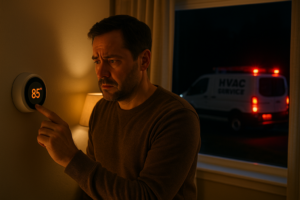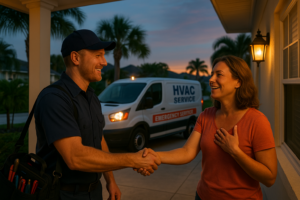


When your air conditioner quits at 2 a.m. during a sweltering Florida summer night, you need 24 hour ac repair service that responds fast and fixes the problem right. In Southwest Florida’s brutal heat and humidity, a broken AC system isn’t just uncomfortable. It’s a genuine emergency that can threaten your family’s health, damage your home, and leave you sweating through sleepless nights. Understanding when you truly need emergency HVAC service, what to expect from after-hours repairs, and how to find reliable help can save you money, stress, and discomfort.
Quick Answer: 24 hour ac repair refers to emergency HVAC services available around the clock when your air conditioning system fails outside normal business hours. These services typically cost 1.5 to 2 times regular rates but provide immediate relief during critical breakdowns in Florida’s extreme heat, addressing safety concerns, preventing property damage, and restoring comfort when waiting until morning isn’t an option.
What Is 24 Hour AC Repair and When Do You Really Need It?
24 hour ac repair is emergency air conditioning service that operates outside standard business hours, including nights, weekends, and holidays. However, not every AC problem requires an emergency call. Therefore, understanding the difference between a genuine emergency and an issue that can wait until morning helps you make smart decisions and avoid unnecessary after-hours charges.
True AC emergencies in Florida typically involve complete system failure during extreme heat, especially when vulnerable family members are present. Additionally, electrical issues like burning smells, sparking, or repeated breaker trips require immediate attention for safety reasons. Water leaks that could damage your home’s structure or belongings also justify emergency service. In contrast, minor issues like a thermostat that needs adjustment or a system that’s running but not cooling efficiently can often wait for regular business hours.
The Florida climate makes AC failures more urgent than in many other regions. Overnight temperatures in North Port, Sarasota, and Venice rarely drop below 75 degrees during summer months. Moreover, indoor humidity can quickly reach uncomfortable and unhealthy levels when cooling systems fail. According to the CDC, heat-related illnesses become serious risks when indoor temperatures climb above 80-82 degrees, particularly for elderly residents, young children, and those with chronic health conditions.
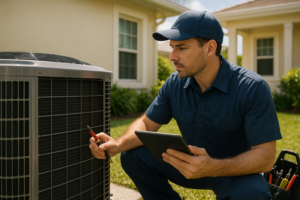
Emergency AC repair typically involves rapid diagnosis, temporary fixes to restore cooling quickly, and a plan for permanent repairs if needed. Consequently, technicians arrive prepared with common parts and equipment to address the most frequent failure points. Most importantly, reputable emergency services provide upfront pricing so you understand costs before work begins.
7 Signs You Need Emergency 24 Hour AC Repair Right Now
1. Complete System Failure During Extreme Heat
When your AC stops working entirely and outdoor temperatures exceed 90 degrees, you’re facing a genuine emergency. In fact, Florida homes can reach dangerous indoor temperatures within just a few hours once the air conditioning stops. This situation becomes critical if anyone in your household is elderly, very young, has respiratory conditions, or takes medications that affect body temperature regulation. Emergency service restores cooling quickly, preventing heat exhaustion and protecting your family’s health.
2. Burning Smells or Smoke Coming From Your AC
Any burning odor or visible smoke from your air conditioning system requires immediate attention. These symptoms often indicate electrical problems, overheating motors, or failing components that could spark a fire. Therefore, turn off your system immediately at the breaker and call for 24 hour ac repair service. Never ignore burning smells, even if the AC seems to be functioning otherwise. Electrical failures can escalate rapidly, putting your entire home at risk.
3. Water Leaking Inside Your Home
While condensation is normal for air conditioners, significant water pooling inside your home signals a serious problem. Clogged drain lines, frozen evaporator coils, or disconnected drainage can cause extensive water damage to ceilings, walls, and flooring. In Southwest Florida’s humid climate, water damage also creates perfect conditions for rapid mold growth. Emergency technicians can stop the leak, prevent further damage, and identify whether you’re dealing with a simple clog or a more serious mechanical failure.
4. Strange Loud Noises Like Grinding, Squealing, or Banging
Unusual mechanical sounds often indicate failing bearings, loose components, or debris in your system. Furthermore, ignoring these noises can lead to catastrophic equipment failure that’s far more expensive to repair. Grinding sounds suggest bearing failure in motors or compressors. Squealing typically points to belt problems or motor issues. Banging or clanking indicates loose or broken internal components. When these sounds are severe or sudden, emergency service prevents complete system breakdown and more extensive damage.
5. Refrigerant Leaks With Visible Ice Formation
Ice forming on your outdoor unit or refrigerant lines indicates your system is losing refrigerant or experiencing serious airflow problems. Additionally, refrigerant leaks pose environmental and health concerns. Modern refrigerants require certified handling, and significant leaks can affect indoor air quality. Ice formation also prevents your system from cooling effectively, and running an AC with low refrigerant damages the compressor. For homeowners in Port Charlotte, Punta Gorda, and surrounding areas where AC systems run nearly year-round, addressing refrigerant issues immediately prevents compressor failure that could cost thousands to replace.
6. Electrical Issues With Repeated Breaker Trips
If your AC repeatedly trips circuit breakers, it’s drawing too much power due to electrical faults, motor problems, or compressor issues. This situation creates fire hazards and indicates serious system problems. Meanwhile, resetting the breaker repeatedly won’t fix the underlying issue and could damage your electrical panel. Emergency technicians have the tools and expertise to diagnose electrical problems safely, protecting both your HVAC system and your home’s electrical infrastructure.
7. AC Failure During Hurricane Season Power Restoration
After a hurricane or severe storm in Englewood, Nokomis, or Osprey, power restoration doesn’t always mean your AC will start working properly. Moreover, power surges during outages can damage sensitive electronic components. If your AC won’t restart after power returns, or if it’s making unusual sounds or tripping breakers, emergency service identifies storm-related damage quickly. During post-storm periods when temperatures soar and humidity is extreme, getting your cooling restored becomes essential for safety and comfort. For more comprehensive information about AC problems, read our complete guide to AC repair for Southwest Florida homes.
How Does After-Hours Emergency AC Service Work?
Understanding the emergency service process helps you know what to expect when you call for help at 11 p.m. on a Saturday. First, when you contact an emergency HVAC provider, you’ll describe your symptoms to a dispatcher or on-call technician. They’ll assess whether your situation truly requires immediate service or could wait until morning. Honest companies will tell you if your problem isn’t urgent enough to justify emergency rates.
Once emergency service is confirmed, technicians typically arrive within one to three hours. However, response times vary based on your location and how many other emergencies are in progress. Upon arrival, the technician performs a diagnostic assessment to identify the problem. Because parts availability is limited during after-hours calls, technicians often carry common failure items like capacitors, contactors, thermostats, and fuses.
Emergency repairs focus on restoring cooling as quickly as possible. In some cases, this means implementing a temporary fix that gets your system running safely until permanent repairs can be completed during business hours. For example, if your compressor has failed and requires replacement, the technician might bypass the outdoor unit and set up temporary cooling if possible, then schedule compressor replacement for the next business day when parts are available.
Reputable emergency services provide clear pricing before beginning work. Therefore, you’ll know exactly what the service call, diagnosis, and repair will cost. After-hours rates typically run 1.5 to 2 times normal pricing due to technician overtime, limited parts availability, and the urgency of the situation. Nevertheless, transparent companies explain these costs upfront so you can make informed decisions.
Finally, quality emergency providers follow up to ensure repairs are holding and your system continues operating properly. They’ll also schedule any necessary follow-up work and provide recommendations to prevent future emergencies.
What Should You Do While Waiting for Emergency AC Repair?
Once you’ve called for 24 hour ac repair service, several steps can keep your family safer and more comfortable while you wait. First, turn off your AC system at the thermostat if you smell burning, see smoke, or notice electrical sparking. In these cases, also shut off power at your electrical panel to prevent fire hazards. However, if the system simply isn’t cooling effectively without safety concerns, you can leave it running.
Open windows if outdoor temperatures are cooler than inside, though this is rarely the case during Florida summer nights. Instead, focus on staying in the coolest parts of your home, typically lower floors and rooms away from direct sun exposure. Close blinds and curtains to block any remaining heat from windows. Additionally, use fans to circulate air, which helps with evaporative cooling even if the air isn’t actually cooler.
Drink plenty of water to stay hydrated, as dehydration accelerates quickly in hot, humid conditions. Avoid activities that generate heat, like cooking, using the oven, or exercising. Take cool showers or use damp towels on pulse points to lower body temperature. Furthermore, if anyone shows signs of heat exhaustion such as excessive sweating, rapid pulse, dizziness, or nausea, seek medical attention immediately.
For vulnerable household members including elderly relatives, infants, or anyone with chronic health conditions, consider temporary relocation to a friend’s or family member’s home with working AC. Alternatively, some communities in Sarasota, Venice, and surrounding areas open cooling centers during extreme heat events. Meanwhile, pets also suffer in extreme heat, so ensure they have plenty of water and the coolest available space.
Document the problem for the technician by noting when the issue started, what symptoms you’ve observed, and any unusual sounds or smells. This information helps technicians diagnose problems more quickly. Also, clear access paths to your indoor and outdoor AC units so technicians can begin work immediately upon arrival.
How Much Does 24 Hour AC Repair Cost in Southwest Florida?
Emergency AC repair costs vary significantly based on the time of call, type of problem, and required parts. Therefore, understanding typical pricing helps you budget and avoid surprises. Emergency service call fees in the North Port, Port Charlotte, and Sarasota area typically range from $150 to $300, compared to $89 to $150 for standard daytime calls. This premium covers technician overtime and after-hours availability.
Diagnostic fees for emergency calls usually run $100 to $200, though many companies apply this to repair costs if you proceed with the work. Once the problem is identified, repair costs depend on the specific issue. Simple fixes like replacing a blown capacitor might cost $200 to $400 during emergency hours, while the same repair during business hours would run $150 to $300. Thermostat replacement ranges from $200 to $500 after hours. Contactor replacement typically costs $200 to $450 during emergency service.
More complex repairs carry higher costs. Blower motor replacement can run $600 to $1,500 during emergency calls. Compressor issues, if repairable during after-hours service, might cost $1,500 to $3,000 or more. However, full compressor replacement usually requires ordering parts and is scheduled for business hours. Refrigerant recharge with leak repair ranges from $400 to $1,500 depending on the amount needed and leak location.
Several factors affect emergency repair costs in Florida. Hurricane season creates higher demand, potentially increasing prices and wait times. Additionally, the age of your equipment matters since older systems may require harder-to-find parts. System size also impacts costs, as larger residential units require more refrigerant and have more expensive components. Moreover, the specific nature of the failure determines whether a quick fix restores service or extensive repairs are needed.
To minimize emergency repair costs, consider preventative maintenance during business hours. Regular service catches problems before they become emergencies. Furthermore, some HVAC companies offer membership or maintenance plans that include discounted or free emergency service calls, priority scheduling, and reduced repair rates. These plans typically cost $150 to $300 annually but can save significantly if emergency service becomes necessary.
How to Choose a Reliable Emergency AC Repair Company
Finding trustworthy 24 hour ac repair service before you need it saves stress when emergencies strike. Therefore, research local companies during calm moments rather than frantically searching at midnight. Start by verifying licensing and insurance. In Florida, HVAC contractors must hold valid state licenses. Check credentials through the Florida Department of Business and Professional Regulation website. Additionally, confirm companies carry liability insurance and workers’ compensation coverage to protect you from liability if accidents occur.
Read reviews specifically mentioning emergency service, not just general AC repair reviews. Look for comments about response times, technician professionalism during after-hours calls, pricing transparency, and quality of emergency repairs. Reviews mentioning Laurel, Osprey, Nokomis, or your specific city provide insight into local service quality. Furthermore, pay attention to how companies respond to negative reviews, as this reveals their customer service approach.
Ask about genuine 24/7 availability. Some companies advertise emergency service but only offer limited after-hours coverage. Verify they have on-call technicians every night, weekend, and holiday, not just “emergency” service that actually means next-day appointments. Additionally, inquire about typical response times for your area. Companies serving the entire Southwest Florida region may prioritize calls based on location and urgency.
Request upfront pricing information. Reputable companies provide clear emergency service rates, diagnostic fees, and typical repair costs before dispatching technicians. They should also guarantee pricing won’t change once work begins unless additional problems are discovered, and they’ll get your approval before addressing those issues. Moreover, ask whether diagnostic fees apply toward repair costs if you proceed with recommended work.
Inquire about payment options, as emergency repairs can strain budgets. Many established companies offer financing, accept major credit cards, or work with third-party payment plans. Also, ask about warranties on emergency repairs. Quality companies stand behind their work even when completed during after-hours calls.
Finally, consider local companies with established reputations in North Port, Venice, Punta Gorda, and surrounding communities. Local businesses depend on word-of-mouth recommendations and typically provide more personalized service than large regional chains. They also understand Florida-specific AC challenges like hurricane season demands and extreme humidity issues.
Preventing Future Emergency AC Repair Situations
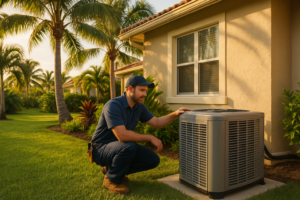
While some AC failures are unpredictable, many emergency situations are preventable with proper maintenance and attention to warning signs. First and foremost, schedule professional AC maintenance twice annually, ideally in spring before cooling season peaks and in fall before occasional winter heating needs. Regular service identifies developing problems before they cause complete failures. Technicians clean components, check refrigerant levels, test electrical connections, and verify proper operation.
Between professional visits, change or clean your air filters monthly during heavy-use months. Clogged filters restrict airflow, causing systems to work harder and potentially overheat. In Florida’s dusty, pollen-heavy environment, filters become dirty quickly. Therefore, consistent filter maintenance protects your system and improves indoor air quality. Additionally, keep outdoor units clear of vegetation, debris, and yard waste. Adequate airflow around condensers prevents overheating and efficiency loss.
Pay attention to subtle changes in your system’s performance. Rising energy bills without increased usage suggest efficiency problems. Longer run times to reach set temperatures indicate developing issues. Unusual sounds, even minor ones, often precede major failures. Addressing these warning signs during business hours prevents emergency failures during nights and weekends. Furthermore, responding to small problems costs significantly less than emergency repairs after catastrophic failure.
Install a programmable or smart thermostat to reduce system strain. Raising temperatures a few degrees when you’re away or sleeping decreases runtime, extending equipment life. Smart thermostats also alert you to system problems, sometimes before you notice reduced cooling. Moreover, they can help you track energy usage and identify efficiency changes that signal developing issues.
Consider surge protection for your HVAC system, particularly important in Florida where afternoon thunderstorms are common. Power surges damage sensitive electronic components, causing failures that often occur hours or days after the actual surge. Whole-house surge protection or dedicated HVAC surge protectors prevent this expensive damage.
Keep your emergency AC repair company’s contact information readily accessible. Save their number in your phone and post it near your thermostat. When emergencies occur, you’ll have immediate access without searching online or through old invoices. Additionally, if your chosen company offers maintenance plans with emergency service benefits, ensure your membership stays current to maximize coverage when you need it most.
Frequently Asked Questions About 24 Hour AC Repair
What qualifies as an AC emergency requiring after-hours service?
True AC emergencies include complete system failure during extreme heat, burning smells or smoke, significant water leaks damaging your home, loud mechanical failures, or electrical issues like repeated breaker trips. These situations threaten safety, property, or health and justify emergency service rates.
How quickly will an emergency AC technician arrive?
Most reputable companies dispatch emergency technicians within one to three hours depending on your location and current service demand. However, during peak summer months or after storms in Southwest Florida, response times may extend slightly during high-demand periods.
Will emergency AC repair cost more than daytime service?
Yes, 24 hour ac repair typically costs 1.5 to 2 times regular rates due to technician overtime and after-hours availability. Emergency service calls usually run $150-$300 compared to $89-$150 for standard visits, with proportional increases for repair work depending on the specific problem.
Can emergency technicians fix any AC problem at night?
Emergency technicians carry common replacement parts and can fix many issues immediately. However, some repairs requiring specialty parts or extensive work may receive temporary fixes to restore cooling, with permanent repairs scheduled during business hours when parts are available.
Should I turn off my AC before emergency service arrives?
Turn off your system if you notice burning smells, smoke, sparking, or repeated breaker trips to prevent safety hazards. For other issues like poor cooling without safety concerns, you can leave the system running, though it may not be cooling effectively.
Do emergency AC repair warranties differ from regular service?
Reputable companies provide the same warranties on emergency repairs as daytime service. Quality workmanship guarantees typically cover labor for 30-90 days, while parts warranties follow manufacturer terms regardless of when installation occurs.
How can I avoid needing emergency AC repair?
Schedule professional maintenance twice yearly, change filters monthly during heavy use, keep outdoor units clear of debris, address warning signs promptly during business hours, and install surge protection. These preventative measures reduce emergency failure risks significantly.
Get Reliable 24 Hour AC Repair From Manasota Cooling & Heating
When your air conditioner fails at the worst possible time, you need a trusted Southwest Florida HVAC partner who responds quickly and fixes problems right the first time. Manasota Cooling & Heating provides genuine 24 hour ac repair service throughout North Port, Port Charlotte, Sarasota, Venice, Punta Gorda, Englewood, Nokomis, Osprey, and Laurel. Our experienced technicians arrive prepared with the tools, parts, and expertise to diagnose problems quickly and restore cooling when your family needs it most. We provide upfront pricing with no hidden fees, ensuring you know exactly what emergency service costs before work begins. Whether you’re facing a complete system failure at 2 a.m. or dealing with concerning symptoms that need immediate attention, our team delivers the professional, reliable emergency AC repair Southwest Florida homeowners trust. Don’t spend another uncomfortable night without cooling. Call Manasota Cooling & Heating now for fast, dependable emergency AC service that gets your system running and your family comfortable again.