

When you’re facing a broken air conditioner in the middle of August or planning an upgrade before hurricane season, the first question on your mind is usually how much does it cost to fix or replace your HVAC system. For homeowners in North Port, Sarasota, Venice, and Port Charlotte, understanding HVAC pricing can feel overwhelming, especially when Florida’s brutal heat and humidity make reliable cooling a necessity, not a luxury. The good news is that HVAC costs are more predictable than you might think once you understand what factors influence pricing and what services you actually need.
Quick Answer: HVAC costs in Florida vary widely based on the service needed. Basic maintenance visits typically range from $89 to $250, while emergency repairs can cost $150 to $800 depending on the issue. Full AC replacement for a standard 3-ton system generally runs between $4,500 and $8,500, including installation. Ductless mini-split systems cost $3,000 to $10,000 depending on the number of zones.
What Factors Affect HVAC Pricing in Florida?
Understanding what drives HVAC costs helps you make informed decisions and avoid overpaying. In Florida, several unique factors influence how much you’ll pay for heating and cooling services.
1. System Size and Capacity
Your home’s square footage determines the size of the AC unit you need. In Florida’s climate, proper sizing is critical because an undersized unit will run constantly in summer, while an oversized system will cycle on and off too frequently, failing to remove humidity effectively. Most Florida homes need 2.5 to 5-ton systems, with 3-ton units being the most common for homes between 1,500 and 2,000 square feet. Larger systems naturally cost more upfront and require more extensive installation work.
2. Energy Efficiency Ratings
Systems with higher SEER (Seasonal Energy Efficiency Ratio) ratings cost more to purchase but save money over time through lower energy bills. Florida’s climate means your AC runs far more than systems in northern states, so the U.S. Department of Energy recommends investing in higher-efficiency models. A 14 SEER system might cost $1,000 less than an 18 SEER unit, but the higher-efficiency model can save you $300 to $500 annually on electricity costs in cities like Englewood or Punta Gorda where cooling season lasts nine months or more.
3. Type of System
Different HVAC systems come with different price tags. Traditional central air conditioning with ductwork remains the most common choice, but ductless mini-splits have become increasingly popular in Florida homes, especially for additions, sunrooms, or older homes without existing ductwork. Heat pumps cost slightly more than AC-only systems but provide efficient heating during our mild winters. Dual-fuel systems, which combine a heat pump with a gas furnace backup, represent the premium option for homeowners who want maximum efficiency year-round.
4. Local Labor and Permit Costs
Labor rates in Southwest Florida vary by location and company. Moreover, most HVAC installations require permits from your local building department, which add $100 to $400 to your project cost. In coastal areas like Osprey and Nokomis, additional requirements for hurricane-resistant installations may apply. Furthermore, homes built before certain dates may need electrical panel upgrades to support modern, high-efficiency systems, adding another $1,000 to $3,000 to the total project cost.
5. Existing Infrastructure
If your home already has properly sized ductwork in good condition, installation costs will be lower. However, many older Florida homes have undersized ducts, leaky connections, or ductwork damaged by humidity and age. Consequently, duct modification or replacement can add $2,000 to $5,000 to your project. Similarly, if your electrical panel can’t handle a new system’s load, that upgrade becomes necessary before installation can proceed.
6. Accessibility and Installation Complexity
Where your HVAC equipment is located affects installation costs. Units installed in attics, crawl spaces, or tight side yards require more labor time and specialized equipment. Additionally, multi-story homes or properties with challenging roof access for condenser placement will see higher installation costs. Homes in Laurel or Venice with mature landscaping may need extra work to position outdoor units properly while protecting plants and maintaining aesthetic appeal.
How Much Does It Cost for Common HVAC Services?
Let’s break down realistic pricing for the HVAC services Florida homeowners need most. These ranges reflect what you can expect in the North Port, Port Charlotte, and Sarasota areas.
1. Routine Maintenance and Tune-Ups
Annual or semi-annual maintenance visits typically cost $89 to $250 per visit. These preventive services include cleaning coils, checking refrigerant levels, testing electrical connections, replacing filters, and identifying potential problems before they become expensive emergencies. In fact, regular maintenance can prevent up to 95% of breakdowns and extend your system’s lifespan by several years. Many contractors, including Manasota Cooling & Heating, offer maintenance plans that reduce per-visit costs and include priority service during peak season.
2. Emergency AC Repairs
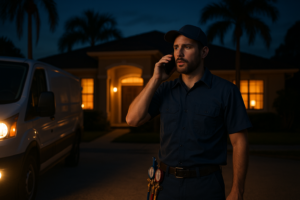
When your AC breaks down on a 95-degree afternoon, emergency repair costs range from $150 to $800 depending on the problem and whether it’s after hours or on a weekend. Common repairs include replacing capacitors ($150 to $400), fixing refrigerant leaks and recharging the system ($300 to $800), replacing contactor relays ($150 to $350), or fixing drain line clogs ($100 to $250). More extensive repairs like compressor replacement can run $1,500 to $2,500, at which point many homeowners choose replacement instead if the system is more than 10 years old.
3. Duct Cleaning and Sealing
Professional duct cleaning costs $300 to $700 for most homes, while duct sealing to fix leaks costs $1,000 to $2,500 depending on how much ductwork needs attention. In Florida’s humid climate, dirty or leaky ducts contribute to poor indoor air quality, excessive dust, and dramatically higher energy bills. Therefore, homes with visible mold growth, pest infestations in ducts, or rooms that never seem to cool properly benefit significantly from these services.
4. Thermostat Upgrades
Replacing an old thermostat with a programmable or smart model costs $150 to $500 installed. Smart thermostats like Nest, Ecobee, or Honeywell models offer remote control via smartphone, learning capabilities that optimize comfort and savings, and detailed energy usage reports. Indeed, homeowners in Englewood and Nokomis typically recoup this investment within 18 to 24 months through reduced energy consumption.
5. Indoor Air Quality Improvements
UV light installations for killing mold and bacteria cost $400 to $1,200. Whole-home dehumidifiers, which are highly valuable in Florida’s humid climate, range from $1,500 to $3,500 installed. Air purification systems cost $800 to $2,500 depending on the technology and coverage area. These investments particularly benefit families with allergies, asthma, or respiratory sensitivities, making homes in humid coastal areas like Osprey and Venice significantly more comfortable.
6. Refrigerant Line Repairs
Refrigerant leaks require professional repair and recharging. With older R-22 refrigerant being phased out, repairs on systems using this refrigerant have become increasingly expensive, sometimes costing $500 to $1,500. Newer systems using R-410A refrigerant typically cost less to service, generally $300 to $700 for leak repair and recharge. However, if your system has a major leak, replacement often makes more financial sense than repeated repairs.
What Does AC Replacement Cost in Florida?
Full air conditioning replacement represents the biggest HVAC investment most homeowners face. Understanding what influences these costs helps you budget appropriately and make smart decisions.
The typical cost range for complete AC replacement in Southwest Florida is $4,500 to $8,500 for a standard 2.5 to 3.5-ton system. This includes the outdoor condenser unit, indoor air handler or evaporator coil, installation labor, permits, and startup. On the other hand, larger homes requiring 4 or 5-ton systems typically see costs of $7,000 to $12,000 or more.
Budget-friendly options using 14 SEER systems from reliable manufacturers start around $4,500 to $5,500 installed. Mid-range systems with 16 to 17 SEER ratings and enhanced features typically cost $5,500 to $7,500. Premium high-efficiency systems with 18+ SEER ratings, variable-speed technology, and advanced humidity control run $7,500 to $12,000 or more.
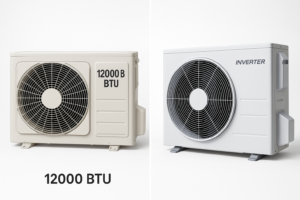
For homeowners considering ductless mini-splits, single-zone systems for one room cost $3,000 to $5,000 installed, while multi-zone systems serving three to five areas run $8,000 to $15,000 depending on the number of indoor units and the system’s efficiency rating. These systems work exceptionally well in Florida because they provide precise temperature control, eliminate duct losses, and offer both cooling and heating in a single system.
When evaluating replacement costs, remember that Florida’s climate means your AC works harder and longer than systems in most other states. As a result, investing in a quality system with good efficiency ratings pays dividends over the 12 to 15-year lifespan you can expect from a well-maintained unit. Furthermore, many utility companies and manufacturers offer rebates for high-efficiency systems that can reduce your upfront cost by $300 to $1,500.
How Can You Save Money on HVAC Costs?
Smart homeowners in Port Charlotte, Venice, and Punta Gorda use several strategies to manage HVAC costs without sacrificing comfort or quality.
1. Schedule Preventive Maintenance
Regular maintenance is the single most effective way to avoid expensive repairs and extend your system’s lifespan. A properly maintained AC uses 15% to 20% less energy than a neglected system, saving you hundreds annually. Additionally, most major breakdowns result from minor issues that could have been caught during routine service visits. Maintenance contracts typically cost $200 to $400 annually and include two service visits, priority scheduling, and often discounts on repairs.
2. Replace Filters Regularly
This simple task costs just $15 to $40 every one to three months but dramatically affects system performance and longevity. Dirty filters force your AC to work harder, increasing wear on components and energy consumption. In Florida’s dusty, pollen-heavy environment, filters often need changing more frequently than in other regions. Moreover, homes with pets or during high-pollen spring months may need monthly filter changes to maintain optimal performance.
3. Get Multiple Quotes for Major Work
For replacement or major repairs, getting three quotes helps you understand fair market pricing and compare options. However, don’t automatically choose the lowest bid. Instead, evaluate what each quote includes, the equipment quality, warranty terms, and the contractor’s reputation. Companies offering prices significantly below market rates often cut corners on installation quality, use inferior materials, or add unexpected charges later. You can find more details on comparing contractors in our complete guide to choosing AC companies in North Port.
4. Take Advantage of Rebates and Incentives
Florida Power & Light, TECO, and other utilities frequently offer rebates for high-efficiency equipment upgrades. Furthermore, federal tax credits may apply for qualifying high-efficiency systems. These incentives can reduce your out-of-pocket costs by $300 to $2,000. Always ask your contractor about available rebates before finalizing equipment selection, as certain models qualify while others don’t.
5. Address Problems Early
Strange noises, warm air from vents, unusually high electric bills, or reduced airflow all signal developing problems. Addressing these issues immediately typically costs $150 to $400 for repairs, whereas waiting until complete failure often results in $800 to $2,500 emergency repairs or even premature system replacement. In Florida’s climate, a minor refrigerant leak can become a compressor failure within weeks during peak cooling season.
6. Optimize Your Thermostat Settings
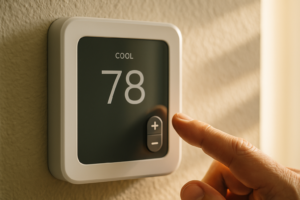
Setting your thermostat to 78 degrees when you’re home and 82 to 85 degrees when you’re away can cut cooling costs by 10% to 15% without significantly impacting comfort. Smart thermostats automate these adjustments and learn your preferences over time. Additionally, using ceiling fans allows you to set the thermostat a few degrees higher while maintaining the same comfort level, since moving air feels cooler even at higher temperatures.
7. Improve Your Home’s Efficiency
Sealing air leaks around windows and doors, adding insulation, and installing reflective window film or cellular shades reduce your AC’s workload. While these improvements cost $500 to $3,000 depending on your home’s needs, they reduce ongoing energy costs permanently and often pay for themselves within three to five years. In Florida’s intense sun, reducing solar heat gain through windows can cut cooling costs by 20% or more.
What Should You Expect During an HVAC Service Call?
Understanding what happens during professional HVAC visits helps you evaluate service quality and know whether you’re getting good value.
For maintenance visits, a qualified technician should spend 60 to 90 minutes thoroughly inspecting and servicing your system. They’ll check refrigerant levels and pressures, clean or replace filters, inspect electrical connections and tighten as needed, clean condenser and evaporator coils, test capacitors and contactor relays, verify proper airflow and temperature drop, inspect condensate drain lines, and provide a written report of their findings with recommendations for any needed repairs.
During repair visits, reputable technicians diagnose the problem before quoting prices, explain what’s wrong in plain language you can understand, provide written estimates before beginning work, show you failed parts when possible, and clean up completely after finishing the job. Furthermore, they should answer your questions patiently and never pressure you into unnecessary services or premature replacement.
For installation projects, professional contractors obtain all required permits, protect your home with drop cloths and floor protection, remove and properly dispose of old equipment, install new equipment according to manufacturer specifications, test all system functions thoroughly, explain operation and maintenance requirements, and provide all warranty documentation and registration information. The installation process typically takes one to three days depending on system complexity and whether duct modifications are needed.
Frequently Asked Questions About HVAC Costs in Florida
How much does it cost to run an AC in Florida monthly?
The average Florida household spends $150 to $300 per month on air conditioning during summer months, though this varies based on home size, insulation quality, thermostat settings, and system efficiency. Larger homes or those with older, less efficient systems can see bills of $400 or more during July and August.
What time of year offers the best HVAC pricing?
Fall and early winter typically offer the best deals on new AC systems because demand drops after cooling season ends. However, spring offers good pricing too, before the summer rush begins. Many contractors offer promotional pricing during these slower periods to keep installation crews busy.
How long do HVAC systems last in Florida?
Florida’s climate is particularly hard on air conditioning systems due to high humidity, salt air in coastal areas, and near-constant operation. Well-maintained systems typically last 12 to 15 years, compared to 15 to 20 years in milder climates. Therefore, homes in coastal communities like Venice and Englewood often see slightly shorter lifespans due to salt corrosion.
Should you repair or replace an old AC system?
If your system is more than 10 years old and the repair costs exceed 50% of replacement cost, replacement usually makes more financial sense. Additionally, if your system uses obsolete R-22 refrigerant, replacement with a modern, more efficient system often provides better long-term value than expensive repairs.
Does homeowners insurance cover HVAC repairs?
Standard homeowners insurance typically doesn’t cover normal wear and tear or lack of maintenance. However, if your AC is damaged by a covered peril like lightning, fire, or hurricane winds, your policy should cover repairs or replacement. Always document damage with photos and contact your insurance company promptly after weather events.
How much does emergency AC service cost?
Emergency service typically includes premium charges of $75 to $150 for after-hours, weekend, or holiday calls, plus standard diagnostic and repair costs. Total emergency visits often run $250 to $1,200 depending on the problem’s complexity and parts needed. Planning ahead with preventive maintenance helps avoid these premium charges.
What payment options are available for HVAC replacement?
Most contractors offer financing options through third-party lenders with terms ranging from 12 to 84 months. Interest rates vary based on your credit score, but promotional periods with 0% interest for 12 to 24 months are common. Additionally, some homeowners use home equity loans or lines of credit, which often offer lower interest rates for major home improvements.
Trust Manasota Cooling & Heating for Transparent HVAC Pricing
At Manasota Cooling & Heating, we believe you deserve straightforward answers about how much does it cost for the HVAC services you need. We serve homeowners throughout North Port, Port Charlotte, Sarasota, Venice, Punta Gorda, Englewood, Nokomis, Osprey, and Laurel with honest pricing, quality workmanship, and exceptional customer service. Our experienced technicians provide detailed written estimates before beginning any work, explain your options clearly, and never pressure you into unnecessary services. Whether you need emergency repair on a sweltering summer afternoon, routine maintenance to keep your system running efficiently, or a complete replacement with modern, high-efficiency equipment, we’re here to help. Contact Manasota Cooling & Heating today at (941) 229-HVAC (4822) for a free estimate and experience the difference that transparent pricing and genuine expertise make for your home’s comfort.